Trust-First TLDs: Why Clean Domain Extensions Are Quietly Becoming 2026’s Most Valuable Ranking Edge
Picking a domain used to feel simple. Find a name you like, grab the cheapest extension, move on. That logic is getting risky fast. If you have been watching rankings wobble, email deliverability dip, or brand trust get harder to earn, you are not imagining it. Google’s March 2026 spam update, plus a fresh wave of phishing and malware campaigns, has changed the math. Some domain extensions now come with baggage you did not create, but may still end up paying for.
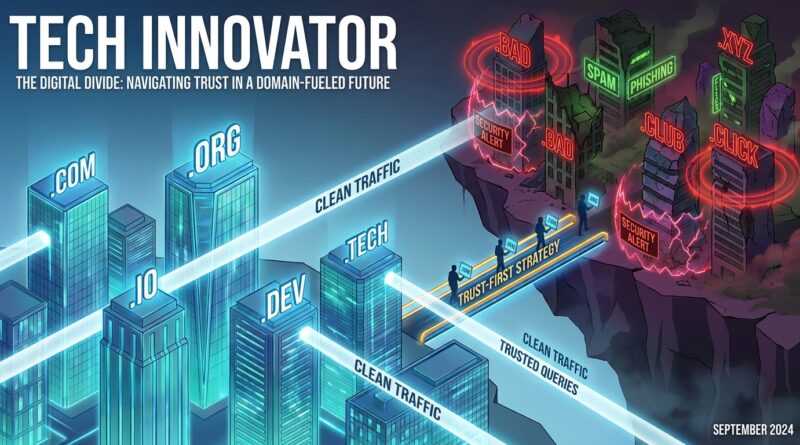
The uncomfortable truth is that not all TLDs live in the same neighborhood anymore. A few have become magnets for junk sites, throwaway campaigns, and expired-domain abuse. Others stay relatively clean, mostly because they cost more, have stronger registration friction, or attract more serious businesses. If you are searching for the best trustworthy domain extensions after Google March 2026 spam update, the smart move is to stop shopping by price alone. Start shopping by reputation, abuse history, and long-term trust.
⚡ In a Hurry? Key Takeaways
- .com, strong country-code domains, and carefully chosen established TLDs are the safest bets if you want long-term trust and fewer spam-neighborhood problems.
- Before buying any domain, check abuse reports, look at who actually uses that extension, and avoid TLDs showing up again and again in phishing and malware data.
- A cheap domain can become expensive if it hurts rankings, clicks, email delivery, or buyer confidence.
Why this suddenly matters so much
Google has spent years saying that a domain extension by itself is not a magic ranking boost. That is still broadly true. A .com does not rank just because it is .com.
But here is the part many site owners miss. Google, spam filters, browsers, security tools, and human visitors all look at patterns. If a TLD becomes packed with low-quality sites, phishing pages, mass-generated content, or expired-domain recycling, that extension starts to carry reputation risk. Not a formal penalty stamped on every site. More like a cloud that follows the whole neighborhood around.
That matters more after the March 2026 spam update because Google is putting extra pressure on scaled abuse, expired-domain manipulation, and trust signals that suggest a site exists mainly to game search. If your domain sits in a TLD that already gets heavy scrutiny from threat researchers and spam systems, you are starting the race with ankle weights.
What “trust-first” really means
A trust-first TLD is not simply a famous one. It is an extension that tends to have a cleaner abuse record, steadier business use, and fewer signals associated with spam or scams.
That usually shows up in a few ways:
- Higher registration cost, which cuts down throwaway abuse
- More real businesses and fewer churn-and-burn sites
- Lower visibility in phishing, malware, and scam reporting
- Stronger user familiarity, which helps clicks and brand confidence
- Less dependence on bulk discounting and coupon-driven registrations
Think of it like renting office space. You can save money by picking a building with broken lights and a sketchy lobby. But good customers may hesitate before they even walk in.
The TLDs getting the side-eye in 2026
Not every cheap extension is bad, and not every premium extension is clean. Still, recent security reporting has put a spotlight on several TLDs that seem over-represented in malicious campaigns or low-trust activity. Names like .bond, .cc, and .cfd keep turning up in discussions around phishing, impersonation, and spam-heavy use.
That does not mean every site on those extensions is dangerous. It means the extension has a reputation problem. And if enough filters, crawlers, or users have learned to be cautious around it, your legitimate project can get caught in the same net.
This is the part that frustrates honest buyers most. You can do everything right and still inherit suspicion from the street address.
The best trustworthy domain extensions after Google March 2026 spam update
.com is still the default safe choice
Yes, it is boring. Yes, a lot of good names are gone. It is still the cleanest general-purpose answer for most projects.
Why? Familiarity matters. Users trust it. Businesses use it. Security systems see huge volume, but also huge legitimacy. If you are building a company, media site, SaaS product, or affiliate project you want to keep for years, .com remains the easiest recommendation.
It will not save weak content or bad SEO. But it rarely creates extra trust friction.
Established country-code domains can be excellent
Good country-code TLDs like .de, .co.uk, .ca, .fr, .nl, .ch, and similar local-market extensions often age well because they are tied to real regional use and strong buyer familiarity inside their markets.
If your audience is country-specific, these can be better than chasing a random global extension. They often attract more serious registrants and less mass abuse than bargain-bin generic TLDs.
Just make sure the domain truly matches your target country and brand plan. A local signal helps most when it is honest.
.org still carries trust for the right kind of site
.org is not only for nonprofits anymore, but people still read it as mission-driven, educational, or community-focused. If your project fits that tone, it can work very well.
For a commercial business, though, .org can feel slightly off unless your brand naturally fits a public-interest or resource role.
.net is plain, older, and still respectable
.net is not exciting, but that may be its strength. It has been around forever, people recognize it, and it does not have the same “cheap campaign” vibe that some newer TLDs picked up.
If your .com is taken and your audience is broad, .net is still one of the safer fallback options.
Selective newer TLDs can work, but be picky
Some newer extensions are perfectly fine. The problem is that you now have to be much more selective. Ask simple questions.
- Is this extension mostly used by real businesses?
- Does it appear in security reporting for abuse?
- Does it feel trustworthy to a normal human at a glance?
- Will it still look credible five years from now?
A niche extension like .law, .bank, or .insurance can inspire trust because it carries meaning and often has tighter controls. On the other hand, ultra-cheap promo-driven TLDs with broad open registration are where things often go sideways.
How Google likely sees this, even if it never says it bluntly
Google usually avoids saying “this TLD is bad.” That makes sense. There are always legitimate sites on every extension.
But Google absolutely tracks abuse patterns at scale. It has to. If an extension becomes a reliable source of spam, doorway pages, parasite SEO, AI-generated junk, or expired-domain manipulation, you should assume that pattern affects how aggressively systems review sites in that space.
That does not mean an automatic demotion. It means less benefit of the doubt.
And frankly, less benefit of the doubt is enough to matter. When rankings are competitive, even small trust disadvantages can turn into fewer indexed pages, slower recovery after updates, or weaker click-through from search results.
How to check whether a TLD is a bad neighborhood
Look at abuse databases and threat reporting
Before registering anything, search the extension plus terms like “phishing,” “malware,” “abuse report,” and “spam campaign.” You are not trying to prove the TLD is perfect. You are looking for repeated red flags.
If the same extension keeps appearing in security write-ups, take that seriously.
Search the TLD in Google itself
Type site:.exampletld style queries using the extension you are considering. See what shows up. Are the results mostly real businesses, local organizations, and quality publishers? Or do you see churn, weird lead-gen pages, and thin content?
A quick manual scan tells you a lot.
Check how normal people react to it
This sounds soft, but it matters. Show the domain to a few non-tech friends. Ask, “Would you click this? Would you trust this with your email or card?”
If they hesitate, your marketing problem has already started.
Review pricing history, not just today’s price
Deep discounts attract bulk abuse. If a TLD constantly runs near-free first-year promos, that is often a warning sign. Good neighborhoods usually have some friction. Not always, but often.
Practical advice for domain investors and site owners
If you are buying new domains
Prioritize reputation over novelty. Shortlist .com first. Then check respected country-code options if your market is local. After that, look at .org or .net if they suit the project.
Use newer TLDs only when the fit is strong and the abuse profile looks clean.
If you already own domains on questionable TLDs
Do not panic-sell everything. Audit instead.
- Which domains are actually developed?
- Which ones depend on SEO traffic?
- Which ones handle email, forms, or payments?
- Which ones would be hardest to trust from a user’s point of view?
Your highest-risk assets are the ones that need trust the most. Those are the first candidates for a move to a cleaner extension.
If a site is already ranking on a risky TLD
You can stay put if the brand is strong, the backlink profile is clean, and the site is genuinely useful. But keep your eyes open. Watch Search Console, indexing behavior, manual action alerts, and email performance.
If the site is central to your business, securing the .com or another cleaner equivalent now is cheap insurance.
What not to do
Do not assume “available” means “smart.” The fact that a domain is easy to register may be the warning sign.
Do not assume all new TLDs are equal. They are not.
Do not tell yourself that users never notice extensions. They do, especially when money, logins, or personal data are involved.
And do not base a 10-year brand decision on a $12 difference at checkout.
The simple shortlist most people can use
If you want a practical answer instead of a philosophy lesson, here it is.
- Best overall: .com
- Best for country-focused businesses: trusted local ccTLDs like .de, .co.uk, .ca, .nl, .ch
- Best for mission, education, or community projects: .org
- Best conservative fallback if .com is gone: .net
- Best niche option: tightly relevant, lower-abuse specialized TLDs with a clear real-world fit
That list is not trendy. That is exactly why it works.
At a Glance: Comparison
| Feature/Aspect | Details | Verdict |
|---|---|---|
| .com trust value | Highest general familiarity, broad business use, lowest user-friction for most brands | Best all-around choice |
| Cheap, abuse-heavy TLDs | Can be over-represented in phishing, spam, and throwaway campaigns, which raises reputation risk | Avoid unless you have a very strong reason |
| Country-code and selective niche TLDs | Strong option when tied to a real market or tightly matched industry, especially if abuse levels stay low | Good pick when used with care |
Conclusion
The big shift this month is not that Google suddenly loves one extension and hates another. It is that the cost of being in a bad neighborhood has gone up. Google’s March 2026 spam update is hitting expired-domain abuse harder, and security researchers are flagging certain TLDs, including .bond, .cc, and .cfd, in large-scale malicious campaigns. That changes the risk profile for everyone buying domains right now. If you understand which extensions are being clustered by spam filters and threat vendors, you can avoid toxic namespaces, quietly move important projects into cleaner TLDs, and give yourself a small but real trust edge before the next update lands. Sometimes the best SEO move is not a trick. It is simply choosing an address that does not make people or machines nervous.