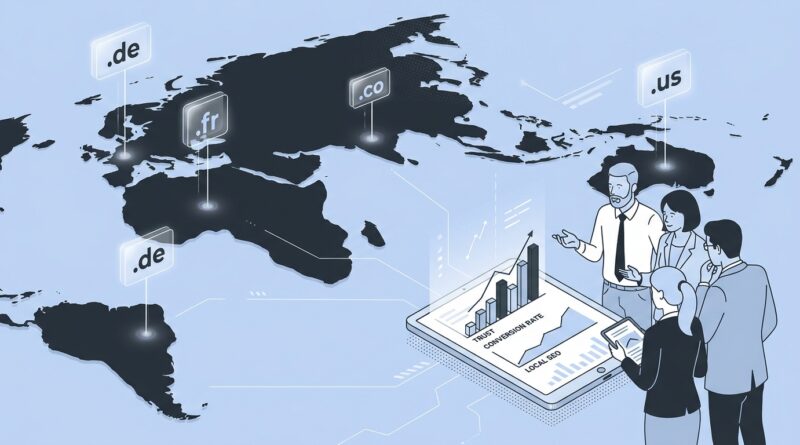
The ccTLD Trust Play: Why Country Domains Are Quietly Beating New gTLDs For Serious Businesses In 2026
If you have ever bought a clever new domain ending, only to watch customers pause, emails miss inboxes, and investors shrug, you are not imagining things. A lot of founders are learning the same expensive lesson. Being memorable is nice. Being trusted is better. In 2026, that trust is quietly pushing many serious businesses back toward country-code domains, especially in markets where local buyers still type the web address straight into the browser and expect to see a familiar ending. That matters at checkout. It matters in cold outreach. It even matters when someone reads your URL on a van, a business card, or a receipt. While everyone else fights over pricey .com names and speculative new gTLDs, established ccTLDs are doing the boring, profitable work. They get used, renewed, and sold to real businesses. For many buyers, that is starting to look a lot smarter than chasing hype.
⚡ In a Hurry? Key Takeaways
- The best country domain extensions for business 2026 are often trusted local ccTLDs like .de, .co.uk, .fr, .nl, and .ch, especially when your buyers live in that country.
- Start by matching your domain to your real market. If most of your customers are local, test a strong ccTLD before overspending on a flashy new gTLD.
- Check renewal fees, local registration rules, and email deliverability before buying. Cheap first-year pricing can hide expensive long-term costs.
Why this shift is happening now
There is a simple reason. People trust what they already know.
When a plumber in Germany, a law firm in the Netherlands, or a retailer in Switzerland uses a local domain ending, it feels normal. Safe. Established. That is not marketing theory. It is how buyers behave when money is involved.
Verisign’s latest numbers also show that the domain market is not cooling off the way some people expected. The overall base is growing again, and renewal rates are staying solid even while huge batches of names come up for expiry. That means good .com names stay expensive, and a lot of trendy new gTLDs still face stiff competition without proving they can build the same level of trust.
Meanwhile, several mature country-code domains keep doing what they have done for years. They attract small businesses, hold strong renewal patterns, and pick up direct navigation traffic that many investors underestimate.
The real problem with many new gTLDs
Some new extensions look great in a pitch deck. Then real life gets involved.
Email trust is still a big deal
Founders often discover this the hard way. A sleek domain on a niche extension may look modern, but email systems and human recipients can be less welcoming. If your outreach lands in spam more often, or a prospect hesitates because the address looks unfamiliar, that costs money.
Checkout hesitation is easy to miss
Customers rarely tell you, “I almost did not buy because your domain looked odd.” They just leave. On a product page or invoice, familiar endings feel safer. This is especially true for local service businesses and smaller ecommerce brands.
Investor demand is thinner than people admit
A lot of portfolios stuffed with fringe new gTLDs look exciting on paper and quiet in practice. Little inbound interest. Lots of renewals. Few serious buyers. That carry cost adds up fast.
If you have been following the broader domain market, you can see a similar search for more durable value in The Tokenized Domain Wave: How ‘Tradable’ Web2 Domains Are Quietly Becoming 2026’s Hottest New Asset Class. The common thread is not hype. It is liquidity, trust, and assets people actually want to own.
Why ccTLDs are quietly beating them for serious business use
They signal local credibility fast
If your company serves Germany, a .de address tells buyers you are part of that market. The same goes for .co.uk in the UK, .fr in France, or .nl in the Netherlands. People recognize the ending right away. There is less mental friction.
They often get direct type-in traffic
This part gets missed by many domain buyers. In countries with strong local internet habits, people still type the business name plus the local extension first. That can create a quiet stream of visits without extra ad spend.
They attract real end users
The strongest ccTLDs are not supported by speculation alone. They are used by real shops, agencies, tradespeople, consultants, and local brands. That creates a healthier resale base because your likely buyer is a business owner, not just another investor looking for a flip.
Renewals are often easier to justify
If a domain has believable local demand and sensible yearly fees, holding it gets less stressful. Compare that with some new gTLD portfolios where a few years of renewals can wipe out any gains from the occasional sale.
Best country domain extensions for business 2026
There is no single best choice for everyone. The right pick depends on where your customers are and how strongly that country uses its local extension. Still, a few stand out in 2026 for trust, adoption, and business demand.
.de
Germany’s .de remains one of the strongest country domains in the world. It has deep local business use, broad consumer trust, and a long track record. For any Germany-focused brand, it is a serious asset.
.co.uk
Still familiar and widely trusted in the UK, even as branding habits evolve. For many British small businesses, it feels more grounded and practical than a novelty extension.
.fr
France continues to support strong local web identity. If your offer is French-first, .fr is often the safer business choice than trying to force a generic global image.
.nl
The Netherlands has one of the internet’s most mature business environments, and .nl has strong recognition. It works especially well for local ecommerce, agencies, and services.
.ch
Switzerland’s .ch carries a clean, trusted reputation. It is often a strong fit for finance, consulting, healthcare, and premium local brands.
Other solid picks
.at, .be, .se, .no, and .dk can also be very attractive if you understand the local market and registry rules. The main point is not to buy random country codes. Buy the ones that local businesses actually use and renew.
How to decide if a ccTLD fits your business or portfolio
Ask where your customers really are
If 80 percent of your buyers come from one country, a local extension may outperform a trendy global one. Not because it is more exciting. Because it feels more trustworthy.
Check live business usage
Search local directories, maps listings, trade associations, and ads. Are real companies using the extension every day? That is the kind of signal that matters.
Look at renewals, not just registration spikes
A domain ending with steady long-term renewals is usually healthier than one that gets bursts of speculative registrations and then drops off.
Read the registry rules
Some ccTLDs have local presence requirements, trustee services, or transfer quirks. None of these are deal-breakers, but you should know them before buying.
Do the renewal math
Low first-year prices can fool people. Always check what year two, year three, and transfer fees look like. This is where many weak bets start to hurt.
What founders should do differently in 2026
Stop treating the domain like a fashion accessory.
Your domain is part of your trust stack. It affects email, branding, local search behavior, and how comfortable a customer feels pulling out a credit card.
If you operate inside one main country, buying the matching ccTLD is often the sensible move. If you are global, you may still want the .com, but pairing it with strong local ccTLDs in your top markets can be a smart defensive play.
And if you are an investor, this is a good time to stop assuming every interesting keyword belongs on a new extension. Some of the best opportunities now are in boring-looking local names with obvious end users and manageable renewals.
Common mistakes to avoid
Buying a country domain just because it is cheap
Cheap is not the same as useful. Some ccTLDs have weak local adoption or little business demand. Stick with markets where people actively use the extension.
Ignoring local language and buying habits
A good domain in the wrong language or with the wrong cultural fit can sit for years. Think like the buyer, not like a collector.
Assuming all trust issues are solved by the extension alone
A trusted domain helps, but it will not fix a bad website, sloppy contact details, or missing security basics. You still need a clean site, proper email setup, and clear company information.
At a Glance: Comparison
| Feature/Aspect | Details | Verdict |
|---|---|---|
| Buyer trust | Established ccTLDs often feel familiar and local, while many new gTLDs still look unusual to mainstream buyers. | Advantage: Mature ccTLDs |
| Holding cost | Strong country domains can have reasonable renewals, while some niche gTLDs become expensive to carry year after year. | Advantage: Depends on registry, but often ccTLDs |
| End-user demand | Local businesses regularly buy and use trusted country domains, creating steadier resale demand than many speculative gTLD niches. | Advantage: ccTLDs with strong local adoption |
Conclusion
The smart play in 2026 is not to swear off .com or pretend every country domain is gold. It is to stop ignoring where real trust and real usage already exist. Verisign’s latest numbers show the overall domain base is accelerating again and renewal rates are holding up even as tens of millions of names come up for expiry. That means competition for quality .com and trendy new gTLDs is only getting fiercer right now. At the same time, fresh industry reports and registry data out of Europe show mature country domains like .de and other established ccTLDs pulling in stable small business adoption and direct navigation traffic, even while many domainers treat them like an afterthought. If you shift even part of your 2026 buying strategy toward trusted ccTLDs with strong local usage and reasonable renewals, you can avoid some of the bidding wars on hyped AI and niche extensions, cut your carry risk, and build around demand that keeps showing up in good times and bad.