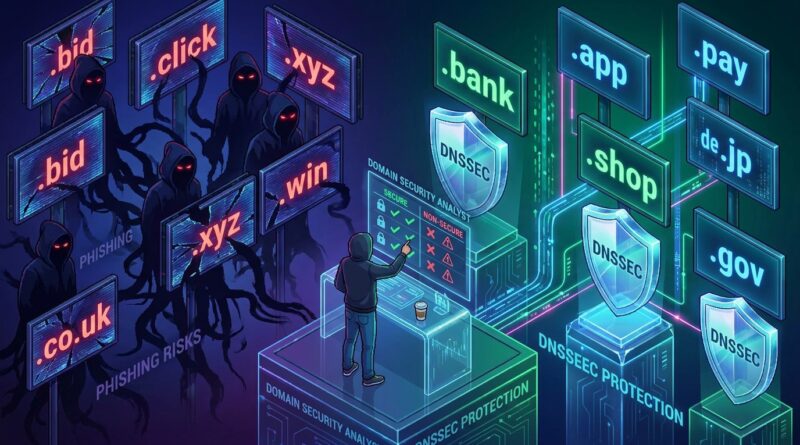
The Quiet Rise Of Security-First Domains: Why DNSSEC-Enabled TLDs Are About To Command A Premium
Most people shopping for domains still get distracted by the shiny part. They compare branding, trends, resale buzz, and whether a startup crowd likes .ai more than .io. Fair enough. But that misses a much uglier problem. A domain can look modern and still sit on top of weak trust plumbing. That matters now more than ever, because phishing, fake login pages, spoofed brands, and AI-written scam campaigns are getting cheaper to run and harder to spot. If you are a founder, investor, or domain buyer, that is frustrating. You can pay up for a great name and still end up with something your security team, your enterprise buyer, or your regulator will side-eye. That is why DNSSEC domain name extensions deserve a lot more attention. The next premium in domains may not come from hype alone. It may come from extensions that can prove, at the protocol level, that users are reaching the real destination and not a tampered one.
⚡ In a Hurry? Key Takeaways
- DNSSEC-enabled domain name extensions are becoming more valuable because they add a real trust layer that flashy branding alone cannot provide.
- Before buying or building on a TLD, check whether the registry supports DNSSEC well and whether your registrar makes it easy to turn on.
- For enterprise, finance, health, and other high-risk uses, stronger registry security can become the difference between approved and rejected.
Why this is suddenly a big deal
DNS is the internet’s address book. When someone types your domain name, DNS helps their browser find the right server. DNSSEC, short for Domain Name System Security Extensions, adds a way to verify that the DNS answer is genuine and has not been altered on the way.
That sounds technical, but the plain-English version is simple. DNSSEC helps stop people from being quietly redirected to the wrong place.
If that protection is missing, attackers have one more opening. Maybe not the only opening, but a real one. And in a world full of fake payment pages, fake investor portals, fake customer support sites, and fake admin logins, every extra trust signal starts to matter.
What makes DNSSEC domain name extensions more attractive
Not all top-level domains are equal when it comes to security. Some registries have invested in stronger practices, including DNSSEC support. Others are slower, patchier, or less mature in how they handle it.
That creates a split in the market.
One side is still buying on trend. The other is starting to ask boring but smart questions. Can this extension support DNSSEC properly? Is it easy to deploy? Will a corporate IT team approve it? Does it fit procurement rules in regulated industries?
Boring questions often make the most money.
Security is turning into a buying filter
For years, a company might have chosen a domain mostly on branding. That still matters. But now legal, compliance, and security teams get a louder vote. If a business handles money, health data, identity checks, legal records, or government contracts, a cool-looking extension is not enough.
They want something that can survive internal review.
That is where DNSSEC domain name extensions can start to command a premium. Not because end users will ask for DNSSEC by name, but because enterprise buyers and security teams will quietly favor domain choices that create fewer headaches.
Why hype-only TLD investing may age badly
A lot of domain chatter still circles around trend extensions. Which one feels modern? Which one is hot with startups? Which one had a few big public sales?
Those things matter. But they are not the whole picture.
If an extension builds a reputation for weak controls, abuse problems, or poor security support, bigger buyers may avoid it. That hurts long-term demand. It also hurts resale narratives.
In contrast, a TLD that is seen as safer, cleaner, and more enterprise-friendly may earn stronger pricing over time, even if it looked less exciting at first.
We are already seeing early versions of that thinking in the security-first TLD conversation. A good example is Why .SAFE Domains Are Suddenly Hot: The Security‑First TLD Play Most Investors Are Sleeping On, which picks up on the same shift. The market is slowly moving from “Does this look cool?” to “Will serious buyers trust it?”
What DNSSEC actually does, without the jargon headache
Here is the easiest way to think about it.
Normally, when your computer asks, “Where is example.domain?” it gets an answer back. DNSSEC adds a signed proof that the answer came from the right source and was not swapped out.
It does not solve every security problem. It does not replace HTTPS. It does not stop someone from making a convincing fake site on a different domain. And it does not magically clean up bad hosting or weak passwords.
But it does make one key part of internet trust stronger. It protects the route to the address book answer itself.
What DNSSEC does not do
This part is important because people often overestimate security features.
DNSSEC does not make a scam site honest.
DNSSEC does not prevent every phishing attack.
DNSSEC does not replace email authentication, SSL certificates, endpoint protection, or user training.
What it does do is reduce the risk of DNS tampering and make the domain layer more trustworthy. That is still a meaningful edge.
Why under-50-percent adoption matters to investors
When adoption is still below halfway across many country-code registries, the opportunity is not “everyone already knows this.” The opportunity is that many people do not.
That is often when a ranking factor becomes useful.
If you are comparing two domain opportunities that seem equal on branding, one extra question can separate them. Which registry is building for trust? Which extension is heading toward enterprise readiness instead of just startup buzz?
That does not mean every DNSSEC-enabled TLD becomes gold. Far from it. But it does mean security support can become a tie-breaker, and sometimes a deciding factor.
How founders should think about this
If you are launching a company, do not only ask whether your domain is memorable. Ask whether it is deployable.
That means asking:
Can your registrar and DNS provider support DNSSEC cleanly?
Some registrars make DNSSEC setup easy. Some make it weird. Some barely explain it. If your stack makes basic security features painful, that is a warning sign.
Will enterprise customers trust your domain setup?
If you sell to banks, hospitals, insurers, law firms, schools, or governments, your buyers may never say “we picked you because of DNSSEC.” But they may notice if your setup looks weak or unusual.
Will you outgrow a trendy extension?
A fun extension can work early on. But if your company is headed toward bigger contracts or stricter audits, you may later wish you had chosen a TLD with a stronger reputation for trust and support.
How domain investors should rank opportunities differently
This is where things get interesting.
Most domain investors already score names on length, clarity, search demand, category fit, and end-user appeal. Add one more column. Security posture of the TLD.
That does not need to be fancy. Start with basic checks.
Look at the registry, not just the suffix
Who runs the TLD? Do they support DNSSEC? Do they publish clear technical policies? Do they have a history of abuse issues or poor reputation? Do large businesses actually use the extension in serious settings?
Check registrar support
A TLD can support DNSSEC in theory, but if the buying and setup path is messy, practical adoption suffers. Easy setup matters.
Watch for regulated-industry fit
Some extensions may eventually win because they fit security-conscious sectors better. Those names may not flip fastest in hype cycles, but they may age better.
Red flags to watch out for
Security-first buying does not mean blind buying. A few warning signs should slow you down.
Registry support exists only on paper
If DNSSEC is technically available but hard to activate, poorly documented, or inconsistently supported, that weakens the real-world value.
Abuse reputation is poor
An extension with lots of spam, phishing, or throwaway use can become toxic even if some security boxes are checked.
No sign of enterprise adoption
If serious organizations are not using the extension, ask why. Sometimes the answer is simply that the TLD is new. Sometimes the answer is less comforting.
At a Glance: Comparison
| Feature/Aspect | Details | Verdict |
|---|---|---|
| Brand buzz alone | Can drive short-term demand, but does not say much about protocol-level trust or enterprise readiness. | Useful, but incomplete |
| DNSSEC support | Helps verify DNS responses are authentic and not tampered with, which strengthens trust at a core layer. | Strong long-term plus |
| Enterprise and regulated-use fit | TLDs with better security support and cleaner reputations are more likely to pass internal reviews. | Often where premium value shows up |
Practical next steps before you buy
If you want a simple checklist, use this before registering or investing in a domain:
1. Confirm the TLD supports DNSSEC.
2. Check whether your registrar supports it well.
3. See if real businesses use that extension for serious work.
4. Look for signs of abuse or trust issues around the registry.
5. Ask whether the domain would pass a security review, not just a branding review.
That one habit can help you avoid a lot of shiny but weak bets.
Conclusion
The smart money in domains may be about to get a lot less flashy. While everyone else keeps arguing about .ai versus .io, a more useful question is starting to emerge: which extensions are being built for trust? DNSSEC domain name extensions will not replace good branding, but they add something many trendy TLD conversations ignore. They make a domain easier to trust at a foundational level. With DNSSEC adoption still under 50 percent of ccTLDs worldwide but steadily rising, early movers have a chance to rank domain opportunities in a very different way. That means spotting extensions that are investing in security, avoiding weaker registries, and shaping portfolios around names that serious companies can actually use. If enterprise demand shifts the way many expect, the winners may not be the loudest TLDs. They may be the ones that quietly make security teams say yes.