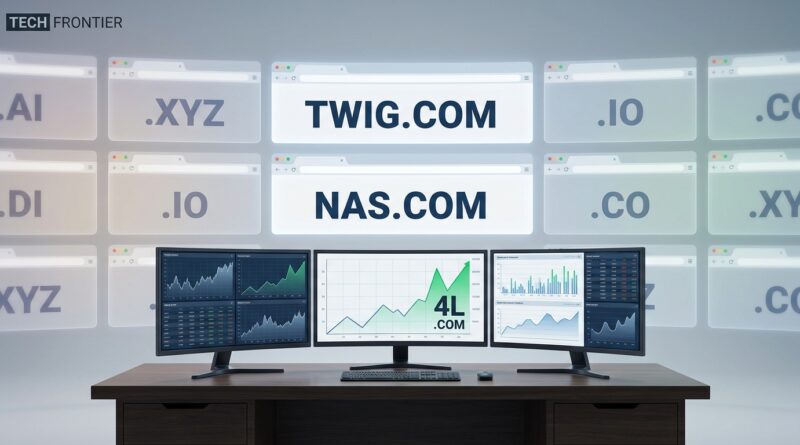
The 4‑Letter .COM Comeback: Why Ultra‑Short Domains Are Quietly Outperforming Fancy New Extensions
If you have been shopping for a startup domain lately, you already know the headache. One minute people say .ai is the future. Then .xyz is “where builders are.” Then some niche extension shows up on X with a few flashy screenshots and suddenly everyone acts like .com is old news. Meanwhile, the biggest real sales keep telling a simpler story. Short .com names, especially three and four letter .coms, are still moving for serious money because buyers understand them fast, trust them fast, and can resell them fast. That matters a lot if you are trying to protect budget, not just chase hype. The real lesson for anyone thinking about 4 letter .com domain value 2026 is this. Liquidity and simplicity still win. Fancy extensions can work for branding, sure. But when money gets tight and trends cool off, ultra-short .coms tend to hold the floor better than most alternatives.
⚡ In a Hurry? Key Takeaways
- Four letter .com domains are back in focus because they are short, brandable, and easier to resell than trendy new extensions.
- If you are buying in 2026, prioritize pronounceable, clean letter combinations and avoid paying premium prices just because a TLD is popular this month.
- The safest value usually sits in names with broad business appeal, not narrow trend-driven keywords tied to one hot sector.
Why short .com names keep winning
People do not buy domains the way they buy sneakers. Hype matters for a while, but trust and memory matter longer.
That is where ultra-short .coms keep punching above their weight. A three or four letter .com is easy to type, easy to say out loud, and easy to fit on a logo, pitch deck, app icon, or business card. You do not need to explain it. You do not need to spell the extension twice. You do not need to say, “No, not dot com. Dot something else.”
That sounds small until you are actually trying to build a company.
Founders often learn this the hard way. They save money with a trendy extension, then spend the next year correcting customers, fixing mistyped emails, or trying to buy the matching .com later for a painful price.
What the market is quietly saying about 4 letter .com domain value 2026
The biggest clue is not social media chatter. It is sales behavior.
When larger buyers, funds, and seasoned domain investors spend six or seven figures, they usually want names with clear exit paths. That means names another buyer will still want later. Four letter .coms fit that logic very well because supply is fixed and tiny compared with demand.
There are only so many combinations. Some are weak, of course. But many work as acronyms, invented brands, fintech names, SaaS products, holding companies, agency brands, and global companies whose first language is not English. That broad use case is a big part of the appeal.
In plain English, these names are not valuable just because they are short. They are valuable because lots of different future buyers can imagine using them.
Scarcity is real
Every possible four letter .com has long been registered. That does not mean every one is expensive, but it does mean there is no fresh supply coming. New extensions can keep adding inventory. .com cannot.
Liquidity is better than most people think
If you own a decent LLLL.com, especially one that is pronounceable or acronym-friendly, there is a much clearer resale market than with most novelty extensions. That does not make it risk-free. It does make pricing and exit planning more grounded.
Branding is simpler
Short .coms leave room for a company to grow. A name like “Zivo.com” or “Rext.com” can become almost anything. A niche name on a trendy extension can feel dated the moment the market mood shifts.
Why founders keep getting pulled toward trendy extensions
Because the good stuff in .com feels expensive. That part is true.
If you are deciding between a hand-registered .xyz and a premium four letter .com, the cheaper option is tempting. No mystery there. It feels modern. It feels scrappy. It feels like you are getting in early.
But cheap upfront can become expensive later.
We saw a version of this in the AI naming rush. If you want a good read on how heated that market got, check out The .AI Price Spike: What Yesterday’s $275K Sale Really Means For Founders Who Still Need A Smart Domain. The big lesson was not that .ai is bad. It was that trend pricing can distort judgment fast.
That same caution matters here. A hot extension can be useful for launch speed or niche signaling. It is just not automatically the best place to park long-term value.
Not all four letter .coms are equal
This is where people get burned. They hear “LLLL.com” and assume every four letter string is gold. It is not.
What usually helps value
Pronounceable patterns tend to do better. Names that look like they could be a startup brand, app, or product usually attract wider interest. Clean consonant-vowel mixes often beat awkward letter piles.
Acronym strength matters too. If a set of letters could stand for many business names, it has more possible end users. Names with strong “radio test” performance also help. If someone hears it once and can type it correctly, that is a good sign.
What tends to hurt value
Clunky letter combinations. Hard-to-pronounce strings. Too many low-demand letters grouped together. Names that look like serial numbers rather than brands.
There is still a floor because of scarcity, but the gap between average and premium can be huge.
How to think about buying in 2026 without overpaying
If you are a founder, ask one question before anything else. Am I buying a domain to use, or a domain I hope someone else will want more later?
Those are related goals, but not identical.
For founders using the domain
If the name is short, easy to say, and fits your budget without causing cash stress, a four letter .com can be an excellent buy. It gives your brand room to grow. It also saves you from the “wrong extension” conversation every time you share an email address.
For investors
Focus on quality, not volume. One strong, liquid LLLL.com is often better than a pile of speculative new-extension names that looked cool for a month. Study comparable sales. Look at actual closed deals, not wish-list asking prices.
For small businesses on tight budgets
You do not need the perfect four letter .com to make progress. But if you can stretch for a solid short .com instead of overbidding on a fad TLD, that choice often ages better.
Practical checklist before you buy
Use this simple filter.
- Can someone hear the name once and spell it?
- Does it look like a real brand, not a random code?
- Could more than one type of business use it?
- Is the asking price supported by real sales, not seller fantasy?
- Would you still like it if the current extension trend vanished next year?
If you answer “no” to most of those, step back.
At a Glance: Comparison
| Feature/Aspect | Details | Verdict |
|---|---|---|
| Brand trust | Short .com names are still the most instantly recognized and least confusing for customers, partners, and investors. | Strong advantage for 4 letter .coms |
| Resale liquidity | Quality LLLL.com domains have a broader buyer pool than most trendy extensions because they work across many industries. | Better long-term exit potential |
| Upfront cost | A good four letter .com usually costs more than a fresh registration on .ai, .xyz, or newer TLDs. | Higher entry price, but often better value retention |
Conclusion
The comeback is not really a comeback. Short .coms never stopped mattering. They just got quieter while newer extensions grabbed headlines. If you are trying to make a smart call in a noisy market, follow the pattern, not the hype. Today’s market noise is pushing a lot of founders and small investors toward whatever TLD is trending on social media, which is the easiest way to overpay for weak names. Zeroing in on the underlying pattern behind this year’s top .com sales helps our community redirect capital into short, liquid, brandable domains that actually hold value through cycles instead of chasing the latest extension fad.