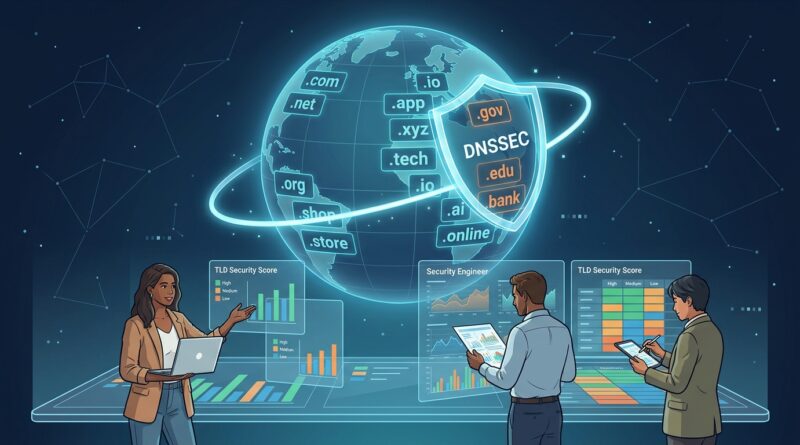
The DNSSEC Upside: Why Security‑Signed TLDs Could Quietly Become 2026’s Most Undervalued Domain Arbitrage Play
Most domain buyers still shop like it is 2018. They look at branding, hype, and whether an extension feels trendy, then stop there. I get why. Security is boring until it becomes your problem. But if you are putting money into domains or building a business on one, ignoring DNSSEC is a bit like buying rental property without checking whether the doors lock. It might work out fine. It also might not.
That blind spot matters more now than it did a few years ago. Browsers, cloud providers, regulators, and abuse teams are getting less patient with weak DNS hygiene. So while people chase flashy namespaces, a quieter opportunity is sitting in plain sight: security-signed TLDs with decent operations and low hype. For anyone interested in dnssec domain name security tld investing, this is one of those rare cases where the safer asset may also be the cheaper one. That is exactly why it could become one of 2026’s most undervalued domain arbitrage plays.
⚡ In a Hurry? Key Takeaways
- DNSSEC at the TLD level is not a side detail. It is a trust signal that can affect long-term value.
- Before buying domains in any extension, check whether the TLD is signed, consistently maintained, and backed by a registry with solid abuse controls.
- A cheap domain in a weak security environment can become expensive fast if trust, deliverability, or buyer confidence drops.
Why this matters more than most investors think
Here is the plain-English version. DNSSEC helps verify that DNS answers are real and have not been tampered with on the way to the user. It does not solve every security problem on the internet. It will not stop phishing by itself. But it does add a real layer of integrity to the naming system that every website, email service, and app depends on.
That matters because domains are not just digital billboards anymore. They are identity anchors. They sit under your website, your email, your customer logins, your APIs, and often your brand reputation. If the base layer is weak, the shiny logo on top does not save you.
Investors often price domains by scarcity, keyword quality, and trend. Those still matter. But there is another question that gets ignored: will this extension still be seen as trustworthy in five years? That is where security posture starts to separate the serious assets from the noisy ones.
What DNSSEC actually tells you about a TLD
It suggests the registry takes the plumbing seriously
A TLD that is properly signed and maintained is usually a sign that the operator cares about core internet standards. Not always. But often enough that it is worth paying attention.
Think of DNSSEC as less of a magic shield and more of a signal. It tells you the registry is willing to do unglamorous work well. In domain investing, boring competence is underrated.
It can reduce future trust discounts
Markets price risk, even when people do it informally. If buyers, platforms, and service providers begin favoring extensions with stronger technical hygiene, then weakly managed TLDs may start carrying a trust discount. That does not mean they become worthless overnight. It means they may age worse.
On the flip side, a narrative-weak but technically solid extension may be underpriced today because the market is still focused on flash instead of durability.
It fits where the industry is heading
Big clouds, enterprise security teams, and regulators are all paying closer attention to DNS integrity, abuse rates, and registry responsiveness. They are not doing this because it sounds good in a press release. They are doing it because weak domain ecosystems create real cost.
If that pressure keeps growing, then strong DNS operations become more than a nice extra. They become part of the value story.
The arbitrage angle hiding in plain sight
This is the part many people miss. Arbitrage is not always about buying what is popular before everyone else. Sometimes it is about buying what is quietly better before the market notices why it is better.
That is the setup with some DNSSEC-strong TLDs right now. A handful of ccTLDs and newer gTLDs have decent security posture, responsible operations, and weaker resale narratives. They are not getting cocktail-party buzz. They are getting overlooked.
That can create a pricing gap. End users and investors may still lump them in with every other “secondary” extension, even though their risk profile is different. If trust becomes a bigger pricing factor in 2026 and beyond, that gap may narrow.
This is also why pieces like The Quiet Rise Of Security-First Domains: Why DNSSEC-Enabled TLDs Are About To Command A Premium are worth reading. The market has spent a long time rewarding the loudest story. Security-first TLDs may end up rewarding the patient buyer.
What to check before you buy
1. Is the TLD actually DNSSEC signed?
Do not assume. Check. Some registries promote security in broad terms while the real implementation story is much thinner. You want to know whether the TLD itself is signed and whether the setup has been maintained reliably.
2. Can registrants use DNSSEC at the domain level?
A signed TLD is a good start. But if registrants cannot easily publish DS records or use DNSSEC on their own names, the practical benefit is smaller. For builders, that matters a lot. For investors, it matters because future buyers may care.
3. How competent is the registry?
Look for signs of operational maturity. Transparent policies. Reasonable abuse handling. Stable DNS infrastructure. Clear technical documentation. Security is not one checkbox. It is a pattern.
4. What is the abuse reputation of the extension?
This is a big one. A TLD can be technically signed and still have a messy abuse profile. If spam, phishing, and throwaway registrations are rampant, that can still hurt trust and resale value. Security is both technical and behavioral.
5. Is pricing realistic for long-term holding?
A premium renewals trap can kill a good thesis. If the extension is secure but annual carrying costs are brutal, your margin disappears. The best opportunities are often where the technical quality is better than the price suggests.
What builders should think about, not just investors
If you are launching a startup, a content site, or a client project, this is not abstract. Your domain choice affects email setup, browser trust perceptions, enterprise buyer comfort, and how seriously your operation is taken in security reviews.
No, most customers will never ask if your TLD is DNSSEC-enabled. But procurement teams, IT departments, and security-aware partners increasingly care about the systems around your brand. Quietly strong infrastructure can remove friction later.
That means this is not only a domainer story. It is a business planning story too.
Common mistakes people make with dnssec domain name security tld investing
Confusing DNSSEC with total safety
DNSSEC helps validate DNS data. It does not make a bad website good. It does not replace HTTPS, secure hosting, decent registrar locks, or smart email authentication. Think layers, not miracles.
Buying the extension story without checking the operator
Two TLDs can look similar from a branding angle and be very different behind the scenes. The registry matters. The policies matter. The actual track record matters.
Ignoring future buyer behavior
Today’s buyer may chase hype. Tomorrow’s buyer may ask harder questions. If enterprise buyers, agencies, and founders become more security-aware, then technically stronger extensions can gain ground even if they are not fashionable right now.
How to build a simple shortlist
If you want a practical approach, use a three-part filter.
First, only consider TLDs with a clear DNSSEC story and registrant support. Second, screen for decent abuse controls and registry professionalism. Third, compare registration and renewal costs against likely end-user demand.
That will not hand you guaranteed winners. Nothing will. But it will remove a lot of avoidable risk and help you spot names where the market may be underpricing trust.
The point is not to become a DNS engineer. The point is to stop buying blind.
At a Glance: Comparison
| Feature/Aspect | Details | Verdict |
|---|---|---|
| DNSSEC support | A signed TLD with working registrant-level DNSSEC support shows stronger technical maturity. | Strong positive signal |
| Registry quality | Look for stable operations, clear policies, and reasonable abuse handling, not just marketing claims. | Often more important than hype |
| Price versus trust | Narrative-weak but security-strong TLDs may still trade below their long-term risk-adjusted value. | Possible 2026 opportunity |
Conclusion
The smartest domain bets are not always the loudest ones. Right now, security-centric TLD selection is an angle almost nobody is talking about, even as regulators, browsers, and big cloud platforms lean harder on DNS integrity and abuse metrics. That creates a real opening. With only a minority of ccTLDs and new gTLDs fully signed and properly maintained, there is still time in 2026 for retail investors and builders to accumulate names in security-strong but narrative-weak extensions before pricing catches up to the risk profile. You do not need to chase every shiny launch. Just start asking one better question before you buy: can this TLD still be trusted when the market gets stricter?