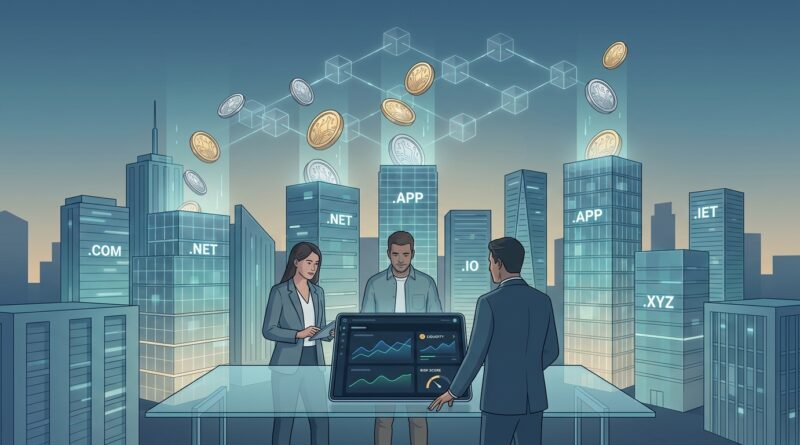
The Tokenized Domain Wave: How ‘Tradable’ Web2 Domains Are Quietly Becoming 2026’s Hottest New Asset Class
You can be forgiven for feeling a little whiplash right now. For years, domain investing was simple enough to explain. You bought a name, held it, maybe parked it, maybe sold it. Now the conversation has changed almost overnight. Suddenly people are talking about tokenized domain names, fractional ownership, on-chain liquidity, and something called DomainFi. If you already own domains, the worry is obvious. Is this a real shift that could change how domains are bought and sold, or is it just crypto dressing up an old business model? The honest answer is somewhere in the middle. Most tokenized domain projects will go nowhere. A few could matter a lot. The smart move is not to panic and not to ignore it either. It is to learn what is actually being built, which parts solve real investor problems, and where the traps are before the crowd piles in.
⚡ In a Hurry? Key Takeaways
- Tokenized domain names are real, but only worth your time when they are tied to clear legal ownership, trusted registrars, and strong resale demand.
- Start small with high-trust TLDs and names you already understand, instead of chasing exotic platforms or weak domains just because they are tradable.
- Fractional ownership can add liquidity, but it also adds platform, custody, and exit risk, so treat it like a higher-risk layer on top of normal domain investing.
Why this is getting attention now
The old domain market has always had one big weakness. It is not very liquid.
You might own a great domain and still wait months or years for the right buyer. During that time, your money is tied up. That is fine if you are patient and well-funded. It is less fine if you want flexibility, faster exits, or access to capital without selling the whole asset.
That is the main promise behind tokenized domain names. Take a domain, connect it to a token structure, and make it easier to trade, split, collateralize, or move between investors. In plain English, it is an attempt to make domains behave a little more like shares in a company and a little less like a house that only sells when one buyer shows up.
What tokenized domain names actually are
This is where people get confused, and honestly, for good reason.
“Tokenized domain names” can mean several very different things.
1. A real Web2 domain linked to an on-chain token
This is the version worth watching. A normal domain, often a .com or other familiar extension, is held through a registrar or custody partner. A token then represents ownership, beneficial rights, or a share of the value of that domain.
If done properly, this could let investors trade exposure to premium domains more easily than using old-school broker channels.
2. Fractionalized ownership of a domain
Instead of one person owning 100 percent of a name, multiple people own pieces. This lowers the entry price for expensive domains and creates a market for partial stakes.
That sounds good, but it only works if the legal agreement is crystal clear. If the blockchain says one thing and the registrar record says another, the registrar record usually matters more in the real world.
3. Blockchain-native naming systems
These are not the same as tokenized domain names in the usual investor sense. Names like wallet-readable Web3 identifiers may be useful, but they do not automatically have the same trust, search, and branding value as a standard .com or country-code domain.
Do not mix these two categories. A tradable blockchain handle is not automatically a good substitute for a mainstream business domain.
Why traditional domain investors should care
Because this trend is trying to fix real pain points.
First, liquidity. If a premium domain can be bought and sold in smaller pieces, that can bring in more buyers.
Second, price discovery. Domain values are often vague until a buyer appears. Trading activity can create a live market signal, even if it is imperfect.
Third, access. Smaller investors who cannot buy a six-figure domain outright may be willing to buy a fraction of one.
Fourth, financing. In theory, tokenized structures could let domain owners unlock capital without giving up total control. Think of it like pulling some value out of a strong asset while keeping upside exposure.
That is the dream, anyway.
Where the real opportunity might be in 2026
If this space sticks, the biggest winners probably will not be random low-quality names that happen to be tokenized. They will be the same kind of domains that already hold value in the regular market.
Premium .com names
No surprise here. Short, memorable, commercially useful .com domains still have the strongest trust with buyers, brands, and end users. If tokenization adds liquidity anywhere, it will likely start with assets the market already respects.
High-trust country-code domains
Some country-code TLDs have strong local business value and active resale demand. Those can also make sense, especially where local brand demand is stable and rules are clear.
Category-defining generics
Single-word or exact-category domains have the best story for fractional ownership because they are easier for outside investors to understand. “This domain represents a whole industry term” is much easier to pitch than “this is a clever two-word brandable that might click with the right startup.”
Revenue-producing domains
This is a big one. A parked domain with traffic, a lead-gen site, or a developed asset with income is easier to token-structure than a pure “maybe someday” resale bet. Cash flow gives investors something to measure.
What could go wrong, because plenty can
This is the part many hype-heavy writeups skip.
Tokenized domain names do not remove risk. They add new kinds of risk on top of the old ones.
Legal ownership can get messy fast
If a token says you own part of a domain, what does that mean legally? Do you own the actual registrar-registered asset, a share in an LLC that owns it, a revenue claim, or just platform-specific points with marketing spin?
If the answer is not clear in plain English, walk away.
Platform risk is real
Your domain might be fine, but the token platform might fail, get hacked, lose banking access, or shut down. If the whole structure depends on one startup staying alive, you are taking startup risk too.
Liquidity can be fake
A platform can say an asset is tradable. That does not mean real buyers exist. Thin trading, insider pricing, and low-volume markets can create the illusion of liquidity without the real thing.
Fractional ownership can make exits harder
This sounds backward, but it happens all the time in investing. Splitting an asset into many pieces may increase access, yet it can complicate control and sale timing. If one clean buyer wants the domain, how easy is it to get every token holder aligned?
Regulation may catch up late, then hit hard
When a digital token starts looking a lot like a security, regulators tend to notice. Not always right away, but eventually. If a project is sloppy about disclosures, rights, or investor protections, that can become a serious issue.
How to tell if a platform is serious
You do not need a law degree or a blockchain engineering background. You just need a checklist and a little discipline.
Look for registrar-grade partnerships
This matters a lot. If a platform works with recognized registrars, licensed trust structures, or established custody providers, that is a better sign than a project that only has a token contract and a Discord server.
Read the ownership documents, not just the homepage
You want to know exactly what buyers receive. Actual title. Revenue rights. Governance rights. Redemption rights. Forced-sale conditions. Voting rules. Dispute process.
If those details are missing, the platform is not ready for serious money.
Check how domains are valued
Who sets the opening price? The founder? An internal committee? Independent appraisers? Market auctions?
The cleaner the process, the better.
Study the exit path
This is huge. If you buy a fraction today, how do you get out later? Can you sell on a secondary market? Can the full domain be sold to an end user? What happens if token holders disagree?
If there is no clear exit path, there is no real investment thesis.
Watch the quality of names on offer
Good platforms attract good inventory. If all you see are weak hand registrations, awkward brandables, and leftovers nobody wanted in the normal market, the token layer is not fixing anything.
A practical way to test the market without getting burned
You do not need to rebuild your whole portfolio around tokenized domain names. In fact, please do not.
A better plan is to run a controlled experiment.
Step 1: Pick one small slice of your portfolio
Choose names that are strong enough to attract interest, but not so important that a messy platform issue would be a disaster.
Step 2: Stay with trusted extensions
Focus on .com first, then maybe a few proven country-code names. Familiar TLDs give you a better chance of attracting both crypto-native traders and regular domain buyers.
Step 3: Prefer clear value stories
A generic name, a short acronym with market demand, or a domain with traffic is easier to tokenize than a speculative brandable.
Step 4: Define your exit before you enter
Know what success looks like. A 2x sale of token exposure? A full-domain buyout? A short-term liquidity event? A yield stream from revenue? If you do not set that in advance, hype will set it for you.
Step 5: Keep records like an adult
Track custody, ownership docs, wallet actions, renewal responsibilities, and tax implications. Boring, yes. Important, absolutely.
For small brands, not just investors
This is not only an investor story.
Small businesses and startups may eventually use tokenized domain names as a way to secure names they otherwise could not afford outright. A brand might buy into a structured acquisition plan, or a community-backed project might pool funds to control a premium domain together.
That opens new doors, but it also raises one simple question. Who is really in charge if something goes wrong?
For a business, brand control matters more than clever finance. If tokenization makes ownership fuzzy, your marketing team, legal team, and customers all lose. So brands should be even more cautious than investors.
What not to do
Let me save you from a few expensive mistakes.
Do not assume tokenization makes a weak domain better
Bad inventory with a blockchain wrapper is still bad inventory.
Do not confuse tradability with value
Just because you can trade something does not mean people want it.
Do not chase tiny platforms with no legal clarity
Pretty dashboards are cheap. Enforceable rights are not.
Do not ignore the old rules
Strong names, clean title, buyer demand, renewal discipline, and patience still matter. Tokenization does not replace domain fundamentals. It just changes the packaging.
My honest read on where this goes next
I do not think tokenized domain names replace the traditional domain market in the next year or two.
I do think they could become a meaningful side lane of the market, especially for premium assets, shared ownership structures, and liquidity events around names that would otherwise sit idle for long periods.
The likely path is boring at first. Real registrar partnerships. Better custody. More legal paperwork. Better settlement rails. Less hype. That is actually good news. Mature infrastructure is what turns a clever idea into a usable market.
If 2026 becomes the year this trend breaks out, it will not be because memes won. It will be because enough boring pieces finally clicked into place.
At a Glance: Comparison
| Feature/Aspect | Details | Verdict |
|---|---|---|
| Liquidity | Tokenized domain names may allow faster entry and exit through fractional trading or secondary markets, but only if real buyers are active. | Promising, but easy to overstate. |
| Ownership Clarity | The best setups tie token rights to clear legal documents, registrar custody, and defined sale procedures. Weak setups leave buyers guessing. | Non-negotiable. Check this first. |
| Best Use Case | Premium .coms, strong country codes, and revenue-producing domains have the clearest fit for tokenization and investor interest. | Stick with proven assets, not novelty names. |
Conclusion
There is a real signal inside the noise here. Domain tokenization is no longer just a whiteboard idea. It is starting to show up through actual partnerships between traditional registrars and Web3 infrastructure, and that makes it worth paying attention to. The opportunity is not in throwing out everything you know about domains. It is in applying the same calm, disciplined investing habits to a new wrapper around the asset. Early movers who learn how to judge platforms, focus on high-trust TLDs, and plan exits before the rush starts could find genuine upside with less risk. For everyday investors and small brands, the smart path is simple. Stay grounded. Start small. Demand clear ownership. And remember that sustainable domain investing still runs on the same old truths, even when the market starts dressing them up in tokens.