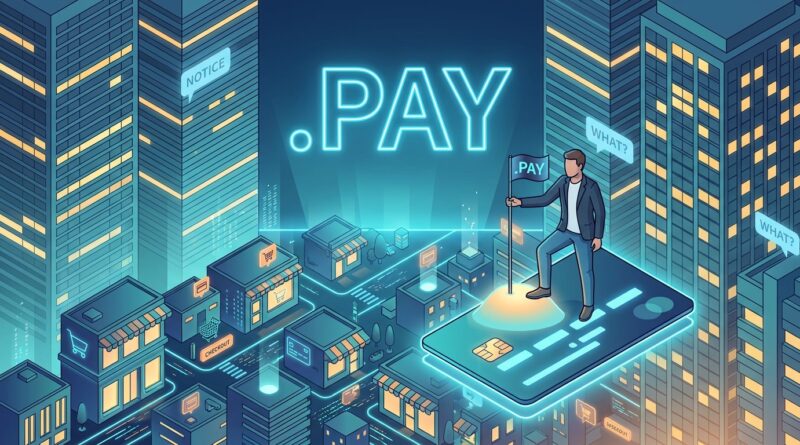
The .PAY Land Grab: Why Payment Domains Just Became 2026’s Most Underpriced Fintech Edge
Checkout pages are where trust gets won or lost. Founders know this. Customers feel it instantly. Yet a surprising number of online businesses still send people to awkward payment links that look like an afterthought, or worse, something you should not click. That is frustrating, because the payment step is the one place where people are already nervous. They are pulling out a card, typing personal details, and deciding in a split second if your business feels safe enough to buy from. That is why .pay domain names matter more than many people think. They are short, clear, and easy to understand. More important, they tell users exactly what is happening on the page. For domain buyers, this is one of those rare moments when a useful naming category is still affordable. The signal is obvious. The pricing, in many cases, has not caught up yet.
⚡ In a Hurry? Key Takeaways
- .pay domain names are shaping up as a low-cost, high-intent asset for fintech, SaaS, ecommerce, and invoice flows.
- If you run a payment-related product, start by checking exact-match, brand-protect, and checkout-specific .pay names before larger players move in.
- Stick to names that are clear, compliant, and easy to trust. A good .pay name can help, but only if the site behind it feels secure and legitimate.
Why this small naming shift matters
Most people do not think deeply about domain endings. They just react to them.
When someone sees a payment link, they want one thing. Reassurance. They want to know they are on the right page, paying the right company, for the right thing.
That is what makes .pay domain names interesting. The extension does a lot of quiet work. It signals purpose fast. It says, “this page is for payments,” without needing a long, messy URL full of subfolders, tracking codes, and generic wording.
That clarity matters for businesses selling subscriptions, invoices, event tickets, software renewals, donor payments, B2B collections, and embedded finance tools. It matters for users too, because a cleaner payment path often feels more trustworthy than a random-looking link on a secondary subdomain.
Why 2026 could be the sweet spot
This is the part domain investors and founders should pay attention to.
.pay domain names still sit in that useful middle ground. They are not brand new and confusing. But they are also not fully picked over by every deep-pocketed fintech brand. That creates an opening.
Users already understand the intent. Regulators and platforms are increasingly focused on payment clarity and fraud prevention. Businesses keep trying to reduce checkout drop-off. All of that pushes naming in the same direction. Shorter. Cleaner. More specific.
Once a few visible case studies hit, prices can move fast. That is usually how this goes. First, the smart operators quietly collect good names. Then larger companies start buying around product lines, country teams, and brand protection. After that, everyone else gets leftovers.
If you follow domain trends more broadly, this fits with the wider window discussed in The 2026 New gTLD Window: How Small Players Can Still Win Before The New Extensions Go Live. Small buyers often do best before the big naming rush becomes obvious.
Who should care about .pay domain names?
Fintech startups
If you build invoicing, merchant services, wallet tools, remittance products, or recurring billing software, a .pay address can be a neat fit for customer-facing flows.
SaaS companies
A lot of SaaS brands now split product experiences across separate domains or subdomains. Billing.company.com works. But brand.pay can be cleaner for payment collection, renewal links, and customer communication.
Ecommerce brands
Stores spend a fortune improving checkout conversion. Then they send buyers to a clumsy payment URL. A strong .pay name can tidy up the final step.
Domain investors
This is where the underpriced angle comes in. Exact-match terms, brand-adjacent names, and functional names tied to payment behavior may still be available at normal registration or modest aftermarket prices.
What kinds of .pay names look strongest?
Not every name with a payment angle is worth owning. The good ones tend to be simple and useful.
Exact-match service names
Think along the lines of invoice.pay, rent.pay, crypto.pay, tuition.pay, ticket.pay, vendor.pay, or recharge.pay. These are easy to understand and naturally tied to real transactions.
Brand protection names
If you already own a business or product brand, securing yourbrand.pay can stop confusion later. Even if you do not use it today, it can be smart defensive buying.
Action-based names
Paynow-style concepts, settlement terms, and billing actions can work well if they are clear and not overly generic or legally risky.
B2B and vertical payment names
Healthcare, legal, logistics, education, and property all have payment workflows with real naming value. Niche often beats broad when actual buyers show up.
What makes a .pay domain valuable in practice?
A good domain is not just “short.” It should solve a real problem.
With .pay domain names, the real value comes from intent. The person clicking already expects a payment step. That can make the domain feel more natural in email requests, SMS reminders, invoices, customer portals, QR codes, and app-based payment prompts.
Here is the simple test. If you saw the domain on a bill, in a payment reminder, or at a checkout screen, would it make immediate sense?
If yes, you may have something useful.
What to watch out for
Trust is not automatic
A .pay extension can help with clarity, but it does not magically make a sketchy site look safe. The page still needs HTTPS, clean design, business identity, and contact details that feel real.
Trademark risk
Do not register names that clearly target another company’s brand. That can get expensive fast, and not in the fun way.
Overly broad speculation
Buying 200 weak names because they are available is not a strategy. One good name with a likely end user is often better than a pile of vague maybes.
Renewal costs
Always check annual pricing before buying in bulk. A cheap first-year registration can hide a more painful renewal bill.
How founders can use .pay domain names right now
You do not need a huge rebrand to make this useful.
You can use a .pay domain for:
- Dedicated checkout pages
- Invoice payment links
- Subscription renewals
- Customer account billing
- Donation and fundraising pages
- Partner or vendor payment portals
This is especially helpful when your main domain is long, highly branded, or not ideal for quick recognition on mobile.
A practical buying checklist
If you are considering .pay domain names, keep the process boring and sensible.
- Start with your own brand and product names.
- Check exact-match terms tied to real payment actions.
- Look for names that are easy to say out loud and easy to type.
- Avoid hyphens, odd spellings, and confusing abbreviations.
- Review trademark conflicts before purchasing.
- Confirm renewal pricing.
- Ask who would actually buy or use the name within two years.
If you cannot answer that last question clearly, keep your wallet closed.
At a Glance: Comparison
| Feature/Aspect | Details | Verdict |
|---|---|---|
| User intent | .pay immediately suggests a transaction, invoice, or checkout action. | Strong fit for payment-facing pages |
| Current pricing window | Many exact-match and adjacent names may still be available at regular or reasonable prices. | Good entry point for early movers |
| Risk level | Value depends on real-world use, trust signals, and avoiding trademark mistakes. | Promising, but buy selectively |
Conclusion
.pay domain names are not a magic trick. They are a practical signal. And right now, they look like one of those rare cases where the market has not fully priced in the obvious use case yet. That is why this matters to the Domains Tip community today. It is still early enough that exact-match and brand-adjacent names can be found at normal prices, but late enough that users and regulators already understand what the extension means. If bigger fintech and SaaS companies start rolling out wider payment naming strategies, the best inventory will not stay cheap for long. For solo founders and smaller investors, this is the moment to be early, not late. Lock up the premium payment real estate while it still feels ordinary.