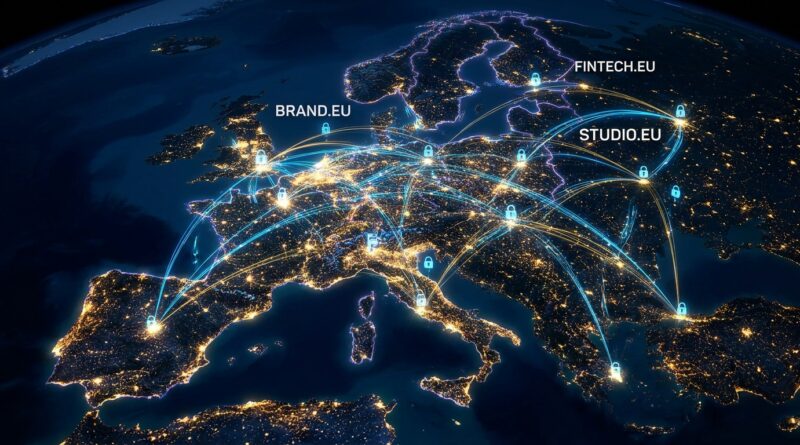
The Quiet .EU Upswing: Why Europe’s ‘Security-First’ Extension Is Becoming 2026’s Smartest Alternative To .COM
You can feel the squeeze when it is time to register a domain. The obvious .com is taken. The catchy .ai is expensive. Newer extensions look fun until you picture them on an invoice, a pitch deck, or a bank onboarding form. That is the real problem in 2026. You do not just need a name that is available. You need one that looks credible, works across borders, and does not set off quiet alarm bells with clients, filters, or compliance teams. That is where the .eu domain trend 2026 gets interesting. While everyone talks about flashy endings, .eu has been getting better at the boring but important stuff. Security. Identity checks. Abuse control. Reasonable pricing. For founders, SaaS teams, fintech brands, privacy tools, and B2B companies selling into Europe, that mix is starting to look less like a backup plan and more like the smart first choice.
⚡ In a Hurry? Key Takeaways
- .eu is becoming a serious alternative to .com in 2026 because it pairs lower entry costs with stronger trust signals.
- If you target EU customers, start by checking clean keyword .eu names that match cross-border services like payments, privacy, logistics, SaaS, and compliance.
- The real value is not just price. EURid anti-abuse checks, KYC steps, and security tools like DNSSEC can help your domain look safer to users and systems.
Why .eu is quietly having a moment
The short version is simple. Buyers are tired of overpaying for attention-grabbing extensions that do not always age well.
.com still matters, of course. But it is crowded, expensive in the aftermarket, and often forces awkward brand choices. Many startups end up with extra words, hyphens, or strange spellings just to get something available. That is not ideal if you want a clean brand.
.eu sits in a useful middle ground. It is familiar enough to look serious. It is specific enough to send a signal. And in 2026, that signal is increasingly about trust.
That is a big reason the .eu domain trend 2026 is worth watching. It is not being driven by hype. It is being driven by practical decisions.
What makes .eu feel safer than many alternatives
A lot of people hear “security-first” and assume it is marketing fluff. In this case, there is something real underneath it.
EURid has taken abuse seriously
EURid, the registry behind .eu, has spent years tightening abuse controls. That includes stronger checks around suspicious registrations, efforts to reduce malicious use, and broader cooperation around online trust and safety.
For regular business owners, that matters because domains do not exist in a vacuum. Email filters, browser warnings, fraud systems, and procurement teams all look at risk, even if they never say so out loud.
If an extension develops a bad reputation, everyone on it pays a price. Good businesses get lumped in with bad actors. That is exactly what many founders want to avoid.
KYC and eligibility checks can actually help
Usually, people hate extra checks. Fair enough. Nobody wakes up hoping to upload documents to a registrar.
But for .eu, some of that friction is part of the appeal. It helps create a cleaner space. If you are serving EU markets, having a domain tied to clearer eligibility and identity rules can work in your favor. It suggests stability. It suggests accountability.
That is especially helpful for fintech, legal tech, health tech, privacy tools, and B2B software where buyers are already asking, “Can we trust these people?”
Why this matters for SaaS, fintech, privacy, and B2B brands
Not every business needs a .eu. But some are a natural fit.
SaaS companies selling across multiple EU countries
If your product is not tied to one country, a country-specific ccTLD like .de or .fr may feel too narrow. .eu gives you a broader European identity without looking generic.
Fintech and payments
Trust is not optional here. If your domain looks cheap, risky, or odd, users hesitate. Partners hesitate too. A clean .eu can support a “regulated, serious, cross-border” message in a way many trendier extensions cannot.
Privacy and security products
This one is almost self-explanatory. If your whole pitch is security, your web address should not undermine you. A well-secured .eu domain can fit neatly with a privacy-first brand.
B2B service providers
Procurement people are not grading you on creativity. They are grading you on whether you look stable and easy to vet. .eu can help there.
The pricing angle nobody should ignore
Let us talk money, because that is often where the decision gets made.
One reason the .eu domain trend 2026 is gaining traction is that it still offers room to buy sensible names without the sticker shock attached to hot US-focused extensions. Investor reports have also pointed to steady strength in European ccTLDs more broadly, which suggests the market is taking these namespaces more seriously.
That creates an interesting window. You can still find solid keyword combinations and brandable names in .eu before prices move the way they did in more crowded extensions.
In other words, this is the stage where you want to shop calmly, not the stage where you chase after everyone else.
If you want a deeper look at the search and branding side, The Quiet .EU Upgrade: How A ‘Trust-First’ ccTLD Just Became Europe’s Most Overlooked SEO Moat is a useful companion read.
A simple playbook for finding underpriced .eu names
You do not need to be a domain investor to do this well. You just need a system.
1. Start with cross-border keywords
Look for words that make sense in more than one EU market. Think:
- payments
- compliance
- privacy
- cloud
- data
- freight
- tax
- identity
- health
- secure
Then pair them with clear business terms. Examples include things like securepay.eu, datavault.eu, or freightflow.eu style combinations. You are not just looking for pretty words. You are looking for names that explain what the business does in one quick glance.
2. Avoid names that need too much explaining
If you have to spell it twice, explain the joke, or defend the odd extension choice, move on. The best .eu names feel obvious.
3. Think like a buyer, not just a founder
Ask yourself how the domain will look in a vendor directory, invoice footer, procurement review, app login page, and sales email. That is where trust gets tested.
4. Check for language flexibility
Europe is multilingual. A name that works cleanly in English and does not sound awkward elsewhere is a plus. You do not need a word that translates perfectly into every language. You just want to avoid accidental confusion.
5. Leave room for growth
Do not box yourself into one city or one tiny niche if you plan to expand. .eu is strongest when it supports a broader regional story.
How to harden a .eu domain so it earns that trust badge
Buying the right domain is only half the job. You also need to set it up properly.
Turn on DNSSEC
This helps protect DNS information from tampering. Many registrars support it, and if yours does, it is worth enabling. It is one of those behind-the-scenes steps that supports a safer, more professional setup.
Use registrar locks and strong account security
Turn on two-factor authentication. Use a unique password. Add registrar lock features if available. The most expensive security mistake is often a simple account takeover.
Use domain-based email protection
Set up SPF, DKIM, and DMARC for your email. This helps reduce spoofing and makes your domain safer for outbound email. If your brand depends on trust, your mail setup matters as much as your website.
Keep ownership records tidy
Make sure the business, not a freelancer or former employee, controls the registrar account and recovery email. You would be surprised how often this goes wrong.
Choose a registrar with a good abuse and support record
Cheap is fine. Chaotic is not. Pick a registrar that handles security settings well and offers responsive support if something breaks.
Who should not rush into .eu
It is not perfect for everyone.
If your business is heavily US-focused and has no clear European customer angle, .eu may create more questions than answers. If you need a single global default for a mass-market consumer brand, .com still has obvious advantages.
Also, if your naming strategy depends on slang, novelty, or a very startup-y tone, .eu may feel too formal. That is not a flaw. It just means the fit is wrong.
The point is not that .eu beats every extension. The point is that it now solves a set of problems that many businesses actually have.
At a Glance: Comparison
| Feature/Aspect | Details | Verdict |
|---|---|---|
| Trust and abuse control | EURid has pushed anti-abuse systems, identity checks, and a cleaner reputation than many low-friction extensions. | Strong choice for serious brands |
| Price and availability | Many quality .eu names remain cheaper and easier to secure than equivalent .com or trendy alternatives. | Good value before wider demand hits |
| Best use case | Works best for SaaS, fintech, privacy, compliance, logistics, and B2B brands serving EU customers across borders. | Excellent fit if Europe is core to your market |
Conclusion
.eu is not winning because it is flashy. It is winning because it solves real headaches. In 2026, businesses need more than a domain that happens to be available. They need one that looks credible, supports compliance, travels across markets, and does not come with a painful premium. That is why the .eu domain trend 2026 matters. EURid’s anti-abuse push and KYC checks are helping turn .eu into a quiet trust badge for SaaS, fintech, privacy, and B2B brands aimed at EU customers. Add fair pricing, better keyword availability, and simple hardening steps like DNSSEC and registrar-level security, and the case gets pretty strong. If you have been waiting for a sensible alternative to overcrowded, overpriced extensions, this may be your window. The smart move is to shop before everyone else decides .eu was obvious all along.