The ENS Identity Surge: Why .ETH Domains Just Became More Than A Crypto Vanity Play
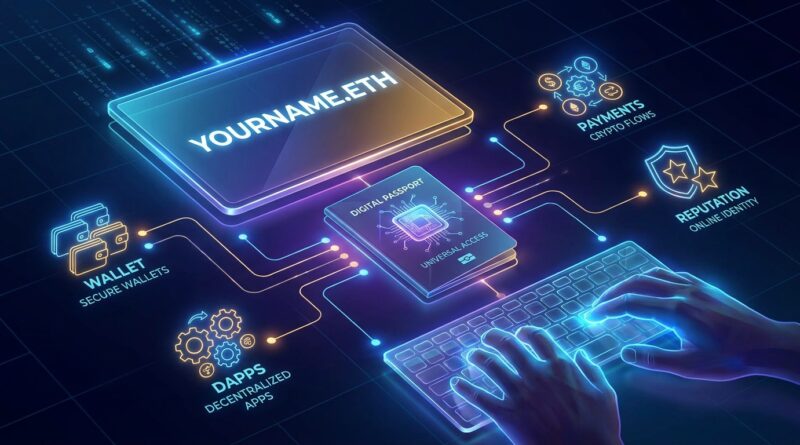
If you have ever rolled your eyes at .eth names, that reaction made sense. For a long time, they felt like the crypto version of a vanity plate. Nice to have, maybe fun to collect, but not something a business owner, freelancer or brand builder could count on. That is what is changing now. ENS domain identity is moving from niche flex to practical tool. In the last 24 hours, more wallets, apps and Web3 services have started treating human-readable names as the normal way to identify users, receive payments and show up on-chain. That matters because people do not want to copy long wallet strings, and brands definitely do not want customers guessing if 0x7f… is really them. A clean .eth name now works more like a business card, username and payment rail rolled into one. If this trend holds, the people who secure the right names early will be in a much stronger position later.
⚡ In a Hurry? Key Takeaways
- ENS domain identity is no longer just a crypto novelty. It is starting to act like a real on-chain login, payment and branding layer.
- If you own a brand, personal name or startup domain, check whether the matching .eth name is available and connect it to your existing wallet and profile now.
- Do not buy random ENS names out of hype. Focus on memorable, brand-safe names you can actually use or defend over time.
Why this suddenly matters
The big shift is not that ENS exists. It has been around for years. The shift is that more of the Web3 stack is starting to behave as if ENS names are expected.
That is a very different story from simple speculation. A collectible only matters if someone wants to buy it from you later. An identity tool matters every time you log in, get paid, sign a message, mint something, join a community or prove that a wallet belongs to your brand.
That is why ENS domain identity is worth a fresh look right now. Utility is catching up with the story.
What ENS really does, in plain English
ENS stands for Ethereum Name Service. The easiest way to think about it is this. It turns a long, ugly crypto wallet address into a readable name like yourbrand.eth.
But that simple description undersells it. A good ENS name can also point to profile data, avatars, linked addresses, websites and app-specific identity details. In practice, it can become your public-facing label across a growing list of crypto tools.
Why human-readable names win
People trust names they can read. They remember names they can say out loud. They are more likely to send money to studio.eth than to a random block of letters and numbers.
That sounds obvious, but obvious things are often the most valuable once products start building around them.
From vanity play to identity anchor
For years, the case for buying ENS names often sounded thin. Maybe values would rise. Maybe brands would care later. Maybe wallets would feature them more clearly. It was a lot of maybe.
Now the picture is cleaner. If wallets, dapps and marketplaces start using ENS names as default identity labels, then a .eth name is no longer just a bet on resale. It is part of your operating setup.
That is the key change. ENS domain identity is becoming infrastructure.
What an “inflection point” looks like
Inflection points are rarely dramatic to outsiders. You do not always get fireworks. You get small product decisions that stack up fast.
A wallet displays your ENS name first. A dapp asks you to set one during onboarding. A payment page looks cleaner with a name than a wallet string. A creator profile uses a .eth handle as your public identity. Once enough services do this, users start expecting it everywhere.
That is usually how these things go. Boring at first. Then normal. Then hard to imagine living without.
Why founders and freelancers should care first
If you run a startup, work independently or build under your own name, this matters more than it does for casual speculators.
Your brand has to be consistent wherever customers find you. That includes your website, social accounts, email, and now increasingly, your on-chain presence. If your web brand is brightlabs.com, but someone else controls brightlabs.eth, that is not ideal.
It creates confusion. It can also create future cleanup work that gets expensive.
Think of it like early username land grab risk
Anyone who has tried to claim a clean Instagram, X or YouTube handle years after launch knows the pain. The good names disappear first. Then the clean business names. Then the obvious alternates.
.eth names are heading into a similar phase. Not every name will matter, of course. Most will not. But short, clear, brand-aligned names are scarce by design.
What smart buyers should actually do now
This is where people often overcomplicate things. You do not need a giant ENS strategy deck. You need a sensible checklist.
1. Secure your exact brand match
If you own a business, creator brand or personal name that matters to your income, start there. The exact match is usually the most important.
2. Grab the obvious defensive variations
If your brand is often misspelled, shortened or written without punctuation, consider a few protective registrations. Not dozens. Just the ones that a real customer or impersonator might actually use.
3. Map it to the wallet you actually use
An ENS name with no proper setup is just shelf decor. Point it to the correct wallet. Test receiving funds. Make sure it resolves properly across the tools you use.
4. Add profile details where supported
Photo, bio, linked site, avatars, public records. Fill out the basics. The more products that read ENS profile data, the more useful that setup becomes.
5. Keep your main web brand aligned
This does not replace your normal domain. It complements it. Your .com or other main site is still your home base. Your .eth is becoming your on-chain front door.
That same brand-mapping logic shows up in traditional domain investing too. If you want a broader view of how naming trends can shift quietly before the crowd notices, it is worth reading The .CLOUD Dividend: How AI Infrastructure Is Quietly Pushing One Overlooked TLD Back Into The Spotlight.
What this means for domain investors
There is still room here, but it is not a free-for-all. The old habit of buying huge piles of names and hoping one sticks is risky.
The better approach is to think like a brand consultant, not a lottery player.
Good ENS candidates usually share a few traits
They are short. Easy to spell. Easy to say. Hard to confuse. Broad enough to stay useful, but specific enough to feel ownable.
Single-word names can be valuable. So can clean two-word brand names. Strong surnames, creator handles and category-defining terms may also matter. But quality matters much more than quantity.
Weak ENS buys are easy to spot
Clunky hyphen-like workarounds. Random number strings. Trend-chasing phrases that will feel stale in six months. Names that are legally messy. Names no serious buyer would want on a business card.
If you would be embarrassed to say it out loud in a meeting, do not buy it.
Where the real value is building
The value is not just in owning a .eth name. It is in the network effect around that name.
When one identity can work across payments, profiles, wallets, social reputation and community access, it starts becoming sticky. Users do not want to switch. Brands do not want to lose it. Products want to support it because customers already know it.
That is how simple naming layers become important infrastructure.
Payments are the easiest gateway
Sending crypto to a readable name is the first obvious use case. It cuts down mistakes and makes transactions less intimidating for regular people.
Once people trust a name for payments, they are more open to using it for everything else.
Login and reputation are close behind
On-chain identity is not just about receiving funds. It is also about proving continuity. Same name. Same wallet history. Same public record across apps. That can matter for creators, communities, DAOs, founders and service providers.
What to watch out for
This does not mean every ENS registration is suddenly a gold mine. Hype can still outrun reality.
Renewal and management matter
An ENS name is not “set and forget” if it matters to your business. You need to watch renewals, wallet security and access control carefully.
Scams and impersonation are still real
A readable name can build trust. It can also be abused by bad actors using lookalike branding. That means brands should move early, and users should still verify where possible.
Not every app supports everything equally
Adoption is growing, but support can still be uneven. Some tools display ENS beautifully. Others only partly support it. That is normal in a transition phase.
The important point is direction. More support usually matters more than perfect support on day one.
Should a non-crypto business care yet?
Yes, at least enough to secure the name and understand the space.
You do not need to move your whole business on-chain this week. But you probably do want to make sure your brand is not missing from a naming layer that could become standard across Web3 identity.
This is especially true if your audience includes developers, online creators, global freelancers, digital communities or younger internet-native buyers. Those groups tend to normalize new identity systems faster than the mainstream.
At a Glance: Comparison
| Feature/Aspect | Details | Verdict |
|---|---|---|
| Branding value | A clean .eth name is easier to remember, share and trust than a raw wallet address. | Strong reason to secure your exact match now. |
| Practical utility | More wallets and dapps are using ENS for identity, payments and profile display. | No longer just a collector item. |
| Investment quality | Only memorable, brand-safe, scarce names are likely to hold long-term value. | Be selective, not reckless. |
Conclusion
If you dismissed ENS before, you were not wrong. It really did look like a side show for a while. What has changed is the level of integration. ENS domain identity just hit a fresh inflection point, with more mainstream Web3 tools treating human-readable names as a requirement instead of a novelty. That turns .eth from a collector’s item into something much closer to an identity anchor. For founders, freelancers and domain investors, the smart move is simple. Map your existing web brand into ENS while the best, most memorable handles are still within reach. When on-chain identity goes properly mainstream, the people who planned early will look much less like speculators and much more like the ones who saw where the internet was heading.