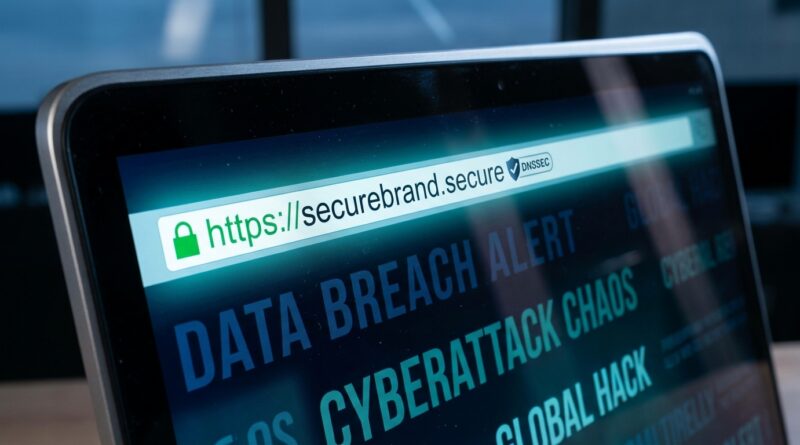
The .SECURE Pivot: Why High‑Trust Domain Extensions Are Becoming 2026’s Quiet Moat
You can feel this problem in your own buying habits. You land on a site that looks polished, the pricing is clear, the product seems fine, and then your brain quietly asks, “Do I really want to put my card in here?” That hesitation is expensive. Founders often blame weak conversion copy, clunky checkout flows, or slow sales cycles, when part of the problem is simpler. Customers do not just want a site that looks legit. They want one that feels safe to trust. That is why secure domain extensions, DNSSEC, and a more deliberate high trust TLD strategy are getting fresh attention for 2026. A domain is no longer just branding. It is part of your trust stack. For small teams especially, that matters. You are not trying to outspend giant brands on ads or legal cleanups. You are trying to remove doubt before it costs you the sale.
⚡ In a Hurry? Key Takeaways
- High-trust domain choices can improve buyer confidence when a plain .com no longer automatically signals safety.
- Check whether your chosen extension supports strong DNSSEC handling and pair it with registrar lock, HTTPS, and strict email authentication.
- This is not a magic shield, but it is one of the cheapest trust upgrades a startup can buy right now.
Why this quiet shift is happening now
Customers have been trained by bad news. Another breach. Another phishing scam. Another fake login page that looked close enough to the real thing.
So people are getting more cautious, even if they cannot explain the technical side. They notice little trust signals. The padlock. The spelling. The extension. The overall “does this feel safe?” test.
For years, founders treated domains mostly as a naming problem. Get the shortest .com you can afford. If not, settle for something catchy. That mindset is starting to crack.
A slick .com still has value, of course. But a .com by itself does not say much about how seriously you treat security. If your users are handing over financial data, health details, business files, or contracts, trust is part of the product.
What people really mean by a “high-trust” TLD
A high-trust TLD strategy is not about picking an extension with a serious-sounding name and calling it a day. It means choosing a domain setup that helps reduce spoofing risk, supports stronger DNS practices, and signals that your company has made security choices on purpose.
That includes a few things
First, the extension itself. Some secure domain extensions are marketed around verified use cases, tighter registration rules, or a more controlled reputation.
Second, DNSSEC support. This is the big one people skip over. DNSSEC helps protect the domain name system from certain types of tampering, so users are more likely to reach the real destination instead of a fake one.
Third, the rest of the setup. SSL certificates, DMARC, SPF, DKIM, registry lock if available, and a registrar that does not feel like it was built in 2009 and forgotten.
If that sounds like a lot, here is the plain-English version. A high trust TLD strategy means making it harder for attackers to impersonate you and easier for customers to believe they are in the right place.
Why DNSSEC matters more than most founders think
DNS is basically the address book of the internet. It tells browsers where to go. DNSSEC adds a verification layer so that address lookups are harder to tamper with.
Most non-technical buyers will never ask whether your domain uses DNSSEC. But they do feel the downstream effects when things go wrong. Fake pages. Redirects. Email fraud. Broken trust.
This is where the search term itself matters. If you are building a secure domain extensions DNSSEC high trust TLD strategy, DNSSEC cannot be a footnote. It has to be on the checklist from day one.
The awkward part is that adoption is still uneven. Some ccTLDs and gTLDs are better than others. Some registrars make setup easy. Others hide it behind layers of confusing menus or weak documentation. That unevenness is exactly why early movers can still gain an advantage.
The moat is not flashy, but it is real
There are not many meaningful moats left that a small team can buy for tens of dollars a year. Most “advantages” today require time, headcount, paid growth, or a legal budget.
A more security-forward domain choice is different. It is low cost. It is visible. And it helps at the exact moment users are deciding whether to trust you.
That can show up in three places fast.
1. Sign-up conversion
When users are making an account for the first time, especially in fintech, SaaS, healthcare, or any tool that stores sensitive files, tiny doubts become drop-offs.
2. Checkout completion
Cart abandonment is not always about shipping costs. Sometimes people simply lose confidence near payment.
3. B2B close rates
Procurement teams and IT reviewers are getting more picky. A business buyer may not reject you over a domain alone, but they absolutely notice whether your setup feels mature and secure.
The branding objection founders usually raise
Yes, some founders worry that anything outside .com looks second-tier. That used to be a stronger argument.
Now the better question is this. What are you optimizing for? Familiarity, or trust under pressure?
If you sell T-shirts, a standard .com may be perfectly fine. If you sell identity tools, encrypted storage, compliance software, payment products, legal tech, or anything where the buyer is actively thinking about risk, a security-centric extension can do more than look neat. It can support your pitch.
And if you already own the .com, this is not necessarily an either-or choice. Some teams use the .com for broad marketing and route security-sensitive experiences through a more purpose-built domain structure.
That is part of why larger security teams have started thinking differently about domain architecture. A good related read is The DotBrand Security Flip: Why CISOs Are Quietly Treating Custom TLDs As Their Next Zero‑Trust Layer. It makes the point clearly. Fancy threat tools do not help much if users can still be tricked by a convincing fake domain.
How to evaluate a secure domain extension without getting lost in jargon
You do not need to become a DNS engineer. You just need a sane shortlist.
Ask these questions first
Does the extension support DNSSEC cleanly?
Is the registry known for tighter policies or clearer abuse handling?
Does the name fit your market without confusing customers?
Can your registrar support registrar lock, two-factor authentication, and strong account recovery controls?
Will your email authentication setup be easy to maintain?
Then test the customer side
Show three versions of your brand name and URL to real users or prospects. Ask a simple question. “Which one would you trust most for entering payment or company information?”
You may be surprised how often people pick the option that feels more deliberate, even if it is less traditional.
What this does not solve
Let’s keep this honest. A secure-sounding domain does not make an insecure company safe.
If your app has weak access controls, your staff reuse passwords, your email is not locked down, and your support team can be socially engineered in five minutes, the extension is not your savior.
Think of it as curb appeal plus better locks. Helpful. Smart. Worth having. But still only one layer.
A practical rollout plan for small teams
Step 1: Audit what you already own
List your main domain, parked domains, common misspellings, and any country-specific names you use.
Step 2: Check DNSSEC and registrar controls
If DNSSEC is available and not enabled, fix that first. Turn on account security features at the registrar too.
Step 3: Review your email authentication
SPF, DKIM, and DMARC matter because phishing often starts in the inbox, not the browser.
Step 4: Decide whether to add a security-forward domain
This could be for login, payments, client portals, trust pages, or a new product line where reassurance matters.
Step 5: Measure business impact
Track sign-up completion, checkout abandonment, demo-to-close rate, and customer questions about security before and after the change.
At a Glance: Comparison
| Feature/Aspect | Details | Verdict |
|---|---|---|
| Traditional .com only | Familiar and broad, but not a clear security signal on its own. Trust depends heavily on the rest of your setup. | Good for brand reach, weaker as a standalone trust play. |
| Security-forward extension with DNSSEC | Can support a stronger trust story, reduce spoofing concerns, and help cautious users feel safer during sign-up or checkout. | Best choice when trust directly affects conversion. |
| Mixed strategy | Use .com for general marketing and a more secure, purpose-built domain structure for sensitive workflows. | Smart middle ground for growing teams. |
Conclusion
The .SECURE pivot is not about chasing a trendy extension. It is about noticing where customer doubt is quietly hurting revenue and fixing part of it with a better trust foundation. Security-centric domain choices are one of the few moats a small team can still buy for tens of dollars a year while bigger brands spend millions cleaning up after breaches. And because DNSSEC adoption is still uneven across many ccTLDs and gTLDs, there is still room to move early. Founders and investors who build or acquire domains with a real secure domain extensions DNSSEC high trust TLD strategy can create a visible trust edge now, not someday. If that edge helps a few more prospects sign up, finish checkout, or say yes in a B2B review, the domain stops being a detail. It starts becoming part of the business case.