The Quiet .US Shakeup: Why America’s Home-Grown Domain Is Suddenly Back On The Acquisition Radar
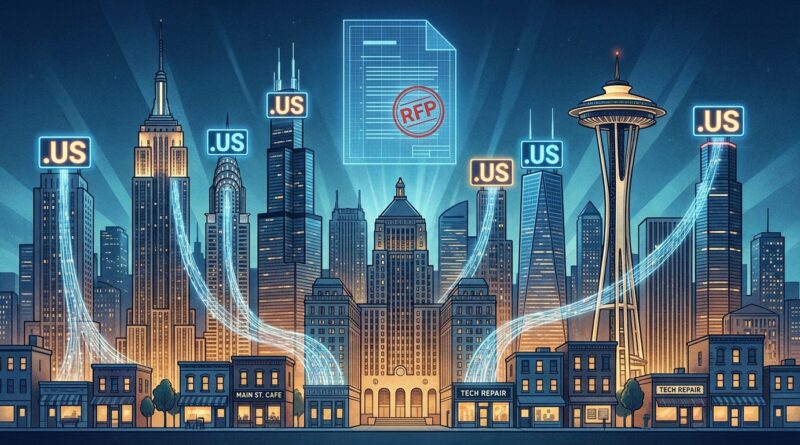
If you have ever brushed off .us as the domain ending nobody really wanted, you are not alone. A lot of founders, investors, and small business owners did exactly that for years. They chased .com, grabbed a trendy new extension, and left .us sitting in the corner like an old filing cabinet. That is why this moment matters. The US government has put the .us registry contract back out for bids, and that simple move could reset how this extension is priced, marketed, and trusted. In plain English, names that looked dull last year may look smart very soon. If you care about the future of .us domain extension 2026, this is the kind of policy shift worth watching early, not after everyone else catches on. The big story is not hype. It is timing. When rules, operator priorities, and public trust signals all change at once, ignored inventory can wake up fast.
⚡ In a Hurry? Key Takeaways
- The .us extension may be entering a real reset period because the NTIA is rebidding the registry contract, which can affect policy, pricing, and public positioning.
- If you own or want .us names, review them now through a 2026 lens. Think local trust, regulated industries, civic use, and American branding.
- Do not assume every .us domain becomes valuable overnight. Eligibility rules, buyer fit, and actual end-user demand still matter.
Why .us is suddenly worth a second look
Most domain extensions change slowly. That is part of why many investors ignore them. Domain names usually move on habit. People buy what they already know, and for American buyers that has meant .com first, almost every time.
.us has had a different image problem. It often felt half-official, half-forgotten. Not quite mainstream for startups. Not quite exciting for speculators. Not always clearly explained to regular business owners.
Now the NTIA, the federal agency tied to the .us country-code space, has opened the door for a new registry operator. That is not just back-office paperwork. It creates a rare moment where the people running the extension, and the rules and priorities around it, may change in ways the market actually notices.
That is the core of the future of .us domain extension 2026 story. Not magic. Not wishful thinking. A real contract process that could alter how .us is managed and perceived.
What the NTIA rebid really means
Think of the registry operator as the company handling the plumbing behind the extension. It manages the system that keeps registrations working, names resolving, policies enforced, and registrars connected.
When the government reopens that contract, a few things come into play:
Policy changes may follow
A new operator may push for cleaner enforcement, better abuse controls, stronger marketing, or different registration priorities. Even small policy changes can affect how desirable an extension feels to serious buyers.
Pricing can shift
Not always dramatically, but enough to matter. Wholesale pricing, premium name handling, and registrar relationships can all affect the end cost buyers see.
Branding can improve
This is the part people underestimate. An extension does not have to become trendy to gain value. It just has to become easier to trust and easier to explain. For .us, that could be enough.
Why trust may matter more in 2026 than it did in 2016
Ten years ago, many online businesses wanted to sound global first and local second. That is still true for some brands, but the internet has changed.
Consumers now care a lot more about where a business operates, how it handles compliance, and whether it looks legitimate. Search behavior has also shifted. Local intent is stronger. AI-powered search summaries often try to identify who serves a specific place, niche, or regulation-heavy need.
That makes a clearly American namespace more interesting than it used to be.
Picture these examples:
- A law firm serving only US clients.
- A medical supplier focused on domestic compliance.
- A veteran-owned contractor working with municipal buyers.
- A local-first publication or civic project.
For those uses, .us can say something useful right in the address. It is not better than .com in every case. But it is more meaningful than many people gave it credit for.
The biggest mistake domain investors may make right now
The mistake is treating .us like it is still frozen in its old reputation.
If the new registry operator improves positioning, crackdowns on abuse, and business outreach, a modest extension can get repriced surprisingly fast. Not every name. Not every niche. But enough of them to matter.
The other mistake is swinging too far the other way and buying junk just because the extension is in the news.
A good .us strategy still needs buyer logic.
Names that may benefit most
- Short, clean geographic terms
- Service categories with strong US-only demand
- Compliance-heavy or trust-sensitive sectors
- Patriotic, civic, or public-interest branding
- Names that read naturally with .us
Names that may stay weak
- Long, awkward phrases
- Trademark-risk registrations
- Random hand registrations with no end user
- Terms better suited to global audiences
Who should pay attention right now
This is not just a domainer story.
Startup founders
If your .com is out of reach, .us may become a smarter second choice for US-focused brands, especially if trust and location matter more than sounding global.
Small businesses
If most of your customers are in America, a solid .us may end up being both memorable and clear. That can matter more than chasing a compromised .com with extra words or dashes.
Investors
This is where timing counts. A sleepy extension can create opportunity when the market has not priced in a likely narrative shift yet.
Policy watchers and digital marketers
The registry contract is a signal that domain names are not just branding tools. They are also infrastructure shaped by rules, governance, and trust.
How to evaluate a .us domain through a 2026 lens
If you want to think clearly about the future of .us domain extension 2026, ask five simple questions.
1. Is the buyer clearly American?
If the natural buyer serves US customers, works under US rules, or wants a domestic identity, the fit improves.
2. Does the name signal trust?
Some names look sharper with .us because the ending reinforces the message. Think legal, civic, health-adjacent, manufacturing, education support, and local services.
3. Is the term easy to say and remember?
If you have to explain the spelling every time, the extension will not save it.
4. Would AI and local search read this as location-relevant?
This is a subtle but important shift. Search systems increasingly try to match user intent with place and service context. A strong .us brand may help support that story, especially when the site content backs it up.
5. Are you buying the name, or the fantasy?
Always the key question. A good domain is one someone can actually use. A bad one is just a story you keep telling yourself.
One thing many people forget about .us
.us is not a free-for-all in the way some generic extensions feel. There are nexus requirements, which means registrants need a qualifying connection to the United States. That can be a plus, not a minus.
Why? Because restrictions can add credibility.
If future policy and enforcement make those rules clearer and more consistent, .us could gain something many newer extensions struggle with: a cleaner identity. Businesses in serious sectors often like that.
What could happen after the new contract is awarded
No one has a crystal ball, but a few outcomes look realistic.
Scenario 1: Better marketing, modest value lift
This is the most likely. .us gets explained better, promoted better, and gains a stronger place among US-facing businesses. Prices rise on quality names, not garbage.
Scenario 2: Policy tightening boosts trust
If abuse enforcement improves and the extension feels cleaner, end users may become more comfortable building on it.
Scenario 3: Registrar visibility improves
Sometimes value rises because buyers simply see the option more often, with clearer messaging at checkout.
Scenario 4: The market shrugs for a while, then catches up
This happens all the time. Policy changes land first. Perception changes later. That lag is exactly where early buyers try to get ahead.
Practical advice if you own .us names today
- Review your portfolio and cut weak names with no likely US end user.
- Separate generic clutter from names with local, civic, or regulated-sector appeal.
- Watch official announcements tied to the registry award and any policy updates.
- Do not race to liquidate strong .us names if the extension gets fresh momentum.
- Update your sales language. Explain why the American identity matters.
Practical advice if you want to buy .us names
- Start with quality, not volume.
- Focus on names a real US business could use tomorrow.
- Check eligibility and nexus requirements before you buy.
- Compare the .us option against bad .com alternatives, not perfect ones.
- Set a budget and avoid buying based on rumor alone.
At a Glance: Comparison
| Feature/Aspect | Details | Verdict |
|---|---|---|
| Trust and identity | .us clearly signals an American presence, which may help domestic brands, public-interest projects, and regulated services. | Stronger than before, especially for US-focused use cases. |
| Investment upside | The NTIA contract rebid creates a rare opening for policy and market perception to change, which can lift strong names. | Promising, but only for selective buyers. |
| Risk level | Not every .us name will gain value. Weak keywords, poor buyer fit, and misunderstanding the rules can still lead to bad buys. | Moderate risk. Research matters. |
Conclusion
.us is not suddenly replacing .com. That is not the point. The point is that the market may have been pricing .us like nothing important could change, and that assumption no longer looks safe. This helps the community today because the NTIA’s open RFP for a new .us registry operator has created a rare window where policy, pricing, and marketing strategy for an entire country-code extension are in flux. Most domainers are still sleeping on this, which means there is a short-term advantage for readers who understand how to re-evaluate .us through a 2026 lens: government-driven trust signals, AI-local search, and compliance-heavy industries that will favor a clearly American namespace once the new contract is awarded. If you stay selective and keep your feet on the ground, this quiet shakeup could be one of the more interesting domain stories of the next year.