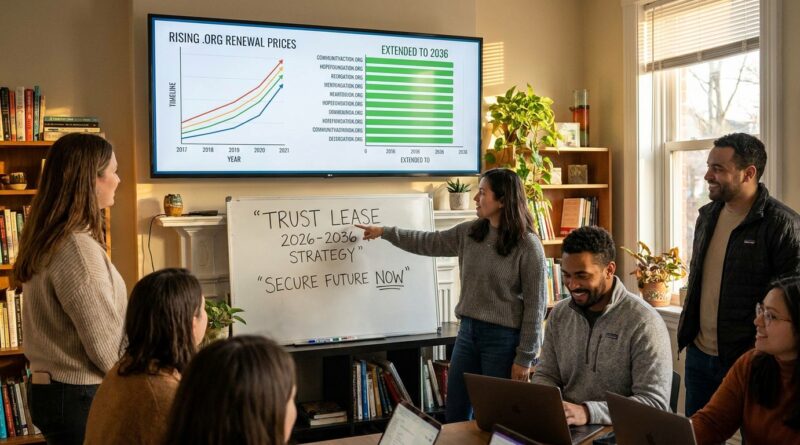
The Quiet .ORG Squeeze: How To Lock In A Decade Of Nonprofit Trust Before Prices Creep Higher
If you run a nonprofit, a community project, or a mission-driven startup, this one stings. You open a domain renewal email, expecting a boring little expense, and suddenly your .org costs more than last year. Then more the year after that. The frustrating part is not just the price. It is how quietly this happens while boards and budget committees still treat the domain like office coffee, not a real asset. That thinking is getting expensive. The .org domain price increase 2026 strategy is now something even small organizations need to talk about, because wholesale prices already moved up on June 1, 2026, and registrars are passing those costs along at very different speeds. Some have already raised renewal rates. Others will. If your domain is tied to donor trust, search visibility, and years of printed materials, waiting until the renewal reminder hits your inbox is the most expensive way to handle it.
⚡ In a Hurry? Key Takeaways
- .org is no longer a “set it and forget it” cost. Locking in multi-year renewals now can protect you from uneven registrar price hikes.
- Check your registrar today, compare transfer pricing, and renew for the longest sensible term your budget allows, often up to 10 years total.
- Your .org is not just a bill. It is a trust signal, a fundraising tool, and a brand asset worth backing up with related domains and strong account security.
Why this matters more than most boards realize
A .org domain looks small on a spreadsheet. It is usually one line item buried under software, email, and website hosting. That is why it gets ignored.
But your domain is doing a lot of work. It is on donation forms, grant applications, business cards, social posts, press coverage, and volunteer outreach. It is often the first thing people see before they decide whether your group feels legitimate.
When that domain gets more expensive every year, the real risk is not just paying a few extra dollars. The risk is getting caught flat-footed. Small organizations often renew late, at full retail price, with no plan B and no backup domains secured.
What changed with .org in 2026
The big issue is simple. Wholesale pricing for .org increased on June 1, 2026. That does not mean every registrar raised prices on the same day, or by the same amount. Some sellers absorb changes for a while. Others pass them through quickly. Some add markups that have very little to do with the registry cost itself.
That creates confusion. One nonprofit may still see a modest renewal price. Another gets a noticeably higher quote for the same extension. Both assume the other must be mistaken.
They are not. Retail domain pricing is messy, and .org is no exception.
Why renewals feel “uneven” right now
Registrars price differently. Some compete hard on first-year promos but charge more on renewals. Some keep pricing fairly flat. Some offer transfer deals that beat their own renewal prices.
So the same .org domain can cost very different amounts depending on where it is parked and when it renews.
That is why a smart .org domain price increase 2026 strategy starts with checking your actual registrar account, not guessing from old invoices.
Treat your .org like a long-term trust asset
Here is the mindset shift. Your .org is not just a technical setting. It is closer to a long-term lease on your public identity.
If you have spent years building trust into that name, then the domain has real value even if the annual fee looks small. Donors remember it. Search engines know it. Printed materials depend on it. Staff email depends on it.
Seen that way, prepaying several years is not wasteful. It is often the cheapest form of brand insurance you can buy.
The practical playbook: what to do this week
1. Check your expiration date and current renewal price
Log into your registrar account. Do not rely on an old receipt or a marketing email. Look at:
- Your current expiration date
- Your renewal cost per year
- Your transfer-out rules
- Whether privacy, DNS, or security features cost extra
Take a screenshot and save it. This gives you a clean baseline for board discussion or finance approval.
2. See how many years you can add right now
Most domains can be renewed up to a maximum total term, often 10 years from the current date. If you already have 2 years left, you may be able to add 8 more. If you expire in a few months, you may be able to add the full 10.
This is where timing matters. If prices are still lower at your registrar today, locking in several years now can be a direct savings move.
3. Compare transfer pricing before you renew
Sometimes the cheapest move is not renewing where you are. It is transferring to a registrar with lower renewal pricing, then adding a year through the transfer and stacking more years after that.
Check carefully, though. Make sure you compare:
- Transfer-in cost
- Renewal cost after transfer
- Support quality
- Two-factor authentication
- DNS tools and domain lock features
A rock-bottom price is not worth much if support is terrible and your team cannot get help during a website or email outage.
4. Ask one boring but important question
Does your registrar auto-renew at the same rate you see today, or at whatever future rate applies on the billing date?
That answer matters. Auto-renew is good for safety, but it is not a hedge against future price increases unless you have already prepaid future years.
5. Register backup extensions that protect your brand
If your main identity is example.org, think about grabbing the obvious companions if they are available:
- example.com
- example.net
- Common misspellings
- Short campaign versions if you use them publicly
You do not need to build separate websites on all of them. In many cases, you just redirect them to your main .org.
This is not paranoia. It is cheap protection against confusion, impersonation, and future headaches.
How to explain this to a non-technical board
Keep it plain. Say this:
“Our .org is part of our trust and fundraising infrastructure. Prices are rising, and waiting means we will likely pay more later. A multi-year renewal locks in a known cost and protects a brand asset we already spent years building.”
That usually lands better than a technical lecture about registries, wholesale rates, or ICANN policy.
A simple board-friendly budget frame
Instead of asking, “Can we afford 10 years of domain renewals?” ask, “Do we want to lock in a predictable cost now for an asset tied to donor trust?”
Those are not the same question.
If you are thinking more broadly about how domain changes affect small organizations, it is also worth reading The 2026 gTLD Power Play: How Small Brands Can Piggyback On Big-Corporate .BRAND Launches Without Spending Millions. It is a useful reminder that domain strategy is getting bigger, not simpler.
Common mistakes that cost nonprofits money
Assuming all registrars charge about the same
They do not. Renewal pricing can vary more than people expect.
Waiting for the last renewal email
That is when you have the least bargaining power and the fewest options.
Keeping the domain in one person’s personal account
This is a classic nonprofit mess. The founder, volunteer, or former contractor bought the domain years ago and now nobody else has full access. Fix that now.
Ignoring account security
A cheap renewal means nothing if your domain gets hijacked. Turn on two-factor authentication. Use registrar lock. Keep contact emails current.
Not owning the matching .com if it is affordable
You may not need it for branding, but you might want it for defense.
How many years should you lock in?
There is no one perfect answer, but here is a sensible rule of thumb:
- If cash is tight, add 2 to 3 years and set a calendar review.
- If the domain is central to fundraising and public trust, 5 years is a strong middle ground.
- If your budget allows and your mission is stable, going out close to the 10-year maximum can make sense.
The right number depends on your budget, your confidence in the name, and whether you may rebrand. Most established nonprofits are not changing names every 18 months, so longer terms are often reasonable.
What about rebranding risk?
Some founders hesitate because they think, “What if we change our name?” Fair question.
But even if a rebrand happens later, older domains often remain useful. They can redirect to the new site, catch old email traffic, and preserve links from articles and partner websites. So a multi-year renewal is not automatically wasted just because your branding might evolve.
At a Glance: Comparison
| Feature/Aspect | Details | Verdict |
|---|---|---|
| Renewing year by year | Keeps short-term spending low, but exposes you to future price hikes and last-minute renewals. | Fine only if cash is very tight and you monitor pricing closely. |
| Multi-year .org renewal | Locks in today’s retail rate at many registrars and reduces the chance of surprise annual increases. | Best move for most established nonprofits and mission-led groups. |
| Buying backup extensions | Adds a small extra cost, but protects traffic, trust, and brand identity if others register similar names. | High-value insurance, especially if your organization is growing. |
Conclusion
.org used to feel like background noise. Not anymore. With wholesale prices already up as of June 1, 2026, and retail renewals rising unevenly across registrars, smaller organizations are the ones most likely to get surprised and squeezed. The good news is that this is fixable. If you treat your domain like a long-duration trust asset instead of a throwaway admin chore, you can make better decisions fast. Check your renewal price, compare transfer options, lock in multiple years if it fits your budget, and secure backup extensions that protect your name. Done right, that simple playbook can save money now, reduce risk later, and keep your organization from paying panic prices the next time quiet domain hikes roll through.