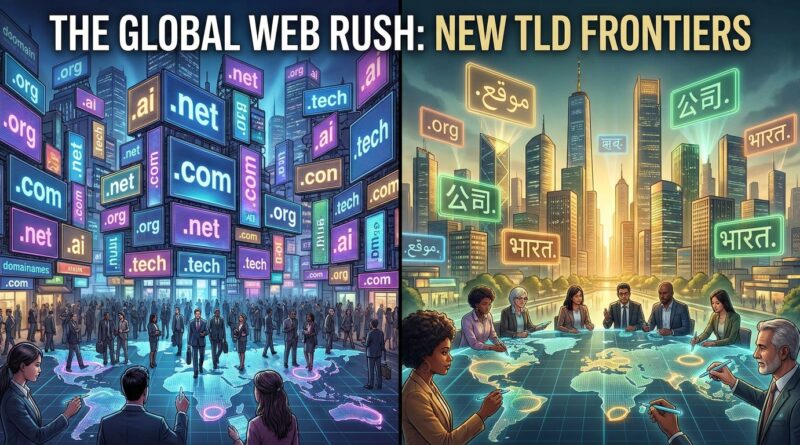
The 27-Script Edge: How Non‑Latin Domain Extensions Just Quietly Became 2026’s Most Undervalued Land Grab
Most domain chatter still sounds like a tiny corner of the internet talking to itself. People fight over .ai, chase tired English .coms, and act like the next big online land rush will also happen in plain Latin letters. That is frustrating, because billions of people do not search, type, read, or trust the web that way. They use Arabic, Chinese, Devanagari, Cyrillic, Thai, Tamil, and many other scripts every day. If you are a founder, agency, or small investor, that gap matters. A lot. ICANN’s 2026 round for new gTLDs is not just another domain industry event. It opens the door to IDN domain extensions 2026 new gTLDs across 27 scripts, and that changes who gets seen online, what feels local, and where early value may form. The simple version is this. If you only think in English keyboard terms, you may be arriving late to the next decade of naming demand.
⚡ In a Hurry? Key Takeaways
- Non-Latin domain extensions are becoming a real opportunity because ICANN’s 2026 new gTLD round supports 27 scripts, not just Latin characters.
- Start by tracking strong local words, trusted categories, and culturally correct names in scripts your target audience actually uses.
- Be careful. Good IDN opportunities are about language fit, policy rules, and real local demand, not blind speculation.
Why this matters more than most people think
For years, the mainstream domain market has behaved like English is the internet’s default setting. It never really was. It was just the easiest part to package, trade, and talk about.
Now the structure is shifting. ICANN has officially opened the 2026 application period for new gTLDs, and support for 27 scripts means we are not only talking about more endings. We are talking about more native ways to name businesses, services, cities, communities, and categories online.
That is a big deal for three groups in particular.
1. Local founders
If your customers read and type in Arabic or Hindi first, a culturally accurate domain can feel more trustworthy than a clever English brand. That trust can matter more than novelty.
2. Agencies and digital consultants
You may soon need to advise clients on naming in more than one script. The businesses that prepare early will look smart. The ones that wait may end up paying premium prices for names they could have secured much earlier.
3. Small investors
This is where people can get carried away, so let’s keep it grounded. The opportunity is real, but it is not “buy anything in another script and get rich.” The value sits in names with actual local meaning, clean usage patterns, and strong commercial intent.
First, a quick plain-English explanation
An IDN is an Internationalized Domain Name. That just means a domain can use characters beyond basic A-to-Z Latin letters. So instead of forcing a business or user to type a transliterated version of a word, the domain can appear in the script they naturally use.
A gTLD is a generic top-level domain. Think of the ending, like .com or .shop. In the 2026 round, new gTLDs can be applied for in many scripts, not only Latin ones.
Put those together, and IDN domain extensions 2026 new gTLDs means new domain endings written in scripts used by huge populations around the world.
Why this could become an undervalued land grab
Because pricing usually lags understanding.
Most broad market attention still goes where English-speaking investors are already comfortable. That creates a familiar pattern. The obvious names in the obvious categories get expensive first. The less understood but deeply local assets stay overlooked until larger portfolio players and brand-protection teams arrive.
That is often when regular buyers realize the easy window has closed.
With non-Latin domain extensions, the same thing may happen. The gap today is not demand potential. It is awareness, language confidence, and market coverage.
What makes these names potentially valuable
Here are the signals worth watching:
- Large native-language user bases
- Strong mobile-first markets where local language use is rising
- Categories built on trust, such as healthcare, education, finance, religion, travel, and local services
- Government or cultural support for local-language digital identity
- Clear pronunciation and meaning inside the target market
Notice what is not on that list. “Looks cool to me” is not enough.
The part many investors get wrong
They assume translation equals value.
It does not.
A direct translation of an English keyword can be awkward, unnatural, or even silly in another language. Some words that look broad on paper are rarely used by real people in search, commerce, or conversation. Others have multiple forms depending on region, gender, politeness, or context.
This is why non-Latin domains can punish lazy buyers fast.
Good IDN thinking looks like this
- Does this word sound natural to native speakers?
- Is it the term people actually type, or just the dictionary version?
- Does the script choice match the audience’s real behavior?
- Are there religious, political, or cultural sensitivities attached to it?
- Would a real business proudly build on it?
How to evaluate opportunities without speaking 27 scripts
You do not need to become a linguist overnight. But you do need a method.
Start with markets, not characters
Pick a region or audience you understand at least a little. Maybe you work with MENA clients. Maybe your agency already serves India. Maybe you know e-commerce sellers in China or Southeast Asia. Start where you have context.
Find the commercial categories first
Broad consumer categories often matter most early on. Think jobs, news, homes, doctors, food, stores, banking, cars, insurance, travel, education.
If a category is local, high-trust, and frequently searched, it is more interesting than a flashy but vague term.
Use native speakers before you spend real money
This is not optional. Have multiple native speakers review any term. Ask a simple question. “If you saw this as a website ending, would it feel natural, useful, credible, weird, outdated, or confusing?”
You want honest reactions, not polite agreement.
Study keyboard reality
How do users actually type on mobile devices in that market? Do they type in native script, mix scripts, or switch to Latin out of habit? A beautiful script-based domain is less useful if the audience rarely enters URLs that way.
Look at existing country-code behavior
If users in a market already trust local-language sites or country-code domains, that is a clue. If everything important still defaults to English or Latin brands, adoption may take longer.
Who should pay attention right now
Not everybody needs to rush in. But a few groups should absolutely start doing homework now.
Small local investors
You may have the biggest edge, because you understand nuance that global domain traders often miss.
Regional branding firms
If you help businesses name products or launch websites, this is a chance to move from reactive advice to proactive strategy.
Founders building for local-language users
If your product is meant for users who think and search in their native script first, waiting may cost you your cleanest naming options.
Trademark and brand teams
Even if your goal is defensive, you should already be mapping key terms and script variants. The later you begin, the more crowded and expensive this gets.
What could slow this down
There are real brakes on this market. It is better to say them out loud than pretend every non-Latin domain will soar.
Browser and user behavior
Many users still arrive through search, apps, and social links rather than manually typing full domains. That can soften the immediate value of script-based navigation.
Registry quality
Some new gTLDs launch strong. Some do not. Registry rules, pricing, abuse controls, and marketing all matter.
Confusion and spoofing concerns
Some scripts can create lookalike risks. That means security policies, variant handling, and registrar support will matter a lot.
Liquidity may be uneven
You may be right on long-term value and still sit on names for years if there is no active resale market yet. This is not a space for impatient money.
A practical way to pre-position now
You cannot register future extensions before they exist, but you can absolutely prepare.
Build a watchlist
Create a spreadsheet by language, script, category, and term quality. Keep it simple. Include meaning, audience, region, possible buyers, and any concerns.
Rank by usefulness, not hype
Give higher scores to names that are:
- short
- easy to understand
- commercially obvious
- culturally clean
- broad enough for many buyers, but not vague
Track applicant news
Not every dreamed-up extension will become a live option. Watch which applicants file, which strings face objections, and which seem built for real adoption rather than headline value.
Talk to people on the ground
This is where many English-only investors lose their edge. Real local feedback beats internet guesswork every time.
Examples of where demand could form first
No one can promise exact winners, but some patterns are easier to imagine than others.
City and region names
Local pride is powerful. Tourism, local government, events, directories, and media can all benefit from native-script identity.
Everyday service categories
Doctors, schools, property, weddings, food delivery, and local retail are not glamorous, but they often have clear commercial intent.
Cultural and religious terms
These can be valuable, but they also need extra care. Missteps here are easy and expensive, both financially and reputationally.
Media and publishing
News, entertainment, and community sites often gain trust when the language feels native from the first glance.
The smart mindset for 2026
Think less like a collector. Think more like a local publisher or business owner.
Ask yourself what would genuinely make sense on a storefront, a search result, a WhatsApp share, or a business card in that language community. If the answer is clear, you may have something useful. If the answer is “maybe another investor would like it,” be careful.
At a Glance: Comparison
| Feature/Aspect | Details | Verdict |
|---|---|---|
| Market attention today | Most speculation still clusters around .ai, .com, and English-friendly naming patterns. | Non-Latin extensions remain underwatched, which is exactly why they are worth studying now. |
| Best early strategy | Focus on native-language commercial terms, local trust categories, and names validated by real speakers. | Quality beats quantity. A small smart list is better than a big random portfolio. |
| Biggest risk | Buying terms that are translated correctly but used poorly, or entering markets you do not understand. | Use native review, policy checks, and patience before spending heavily. |
Conclusion
This is one of those internet shifts that looks niche right up until it does not. ICANN has officially opened the 2026 application period for new gTLDs, including support for 27 different scripts, and that is a once-in-a-decade structural change in how domain value may be created and discovered in emerging markets. The people who benefit most may not be the loudest domain speculators. They may be small investors with local knowledge, founders serving real language communities, and agencies willing to do careful homework early. If you start now, you can evaluate, prioritize, and pre-position around non-Latin domains before bigger portfolios and brand-protection teams crowd the field and drag the whole conversation back toward the usual English-first frenzy. That window is open today. It may not stay quiet for long.