The Quiet .DOT Experiment: Why This ‘Meta’ Extension Could Be 2026’s Smartest Asymmetric Bet
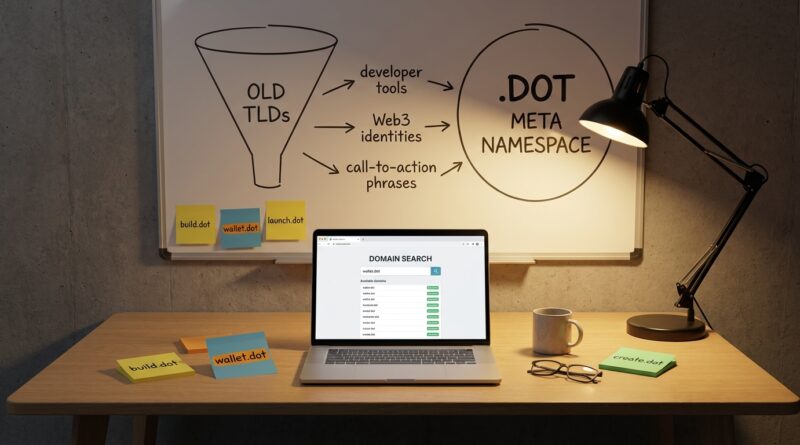
If you are tired of watching domain hype races from the sidelines, you are not alone. One camp is paying eye-watering prices for .ai names and then sweating the renewals. The other is staring at the next gTLD round and wondering who has six figures lying around for an application. For everyone else, the fear is familiar. Buy too early and you get stuck with illiquid junk. Wait too long and the few smart names are gone. That is why the quiet case for the dot domain extension matters. .dot is not interesting because it is flashy. It is interesting because it changes how a domain reads, sounds, and sells. When the extension itself says “dot,” the whole name becomes part web address, part marketing line, part spoken prompt. That makes it a strange little asymmetric bet. The downside can be controlled. The upside comes from story, not just scarcity.
⚡ In a Hurry? Key Takeaways
- The dot domain extension is worth watching because “dot” has built-in meaning in speech, branding, and calls to action.
- Focus on names that read naturally before and after the dot, like commands, phrases, or memorable brand cues.
- Do not spray money across random registrations. Treat .dot like a selective narrative play, not a bulk inventory game.
Why .dot feels different from the usual new-extension pitch
Most domain investing starts with a simple formula. Find a strong keyword. Pair it with an extension people already accept. Hope end-user demand shows up later.
.dot breaks that pattern a bit.
The word “dot” already lives in people’s heads as part of how the internet works. People say it out loud. They type it. They hear it in ads. So a dot domain extension is not just another label stuck on the right side of a name. It can change the meaning of the whole phrase.
That is the real experiment here.
If you own a name like get.dot, shop.dot, or start.dot, the appeal is not just the keyword. It is the way the full domain looks in a sentence, sounds in a podcast ad, and sticks in memory.
That is a very different kind of value from the old “exact match keyword plus extension” game.
The smart question is not “Is .dot good?”
The smart question is, “What kinds of names become stronger because the extension literally says dot?”
That shift matters. It stops you from buying a pile of average names just because they are available.
Think in phrases, not inventory
With .com, people often forgive clunky wording because .com is familiar. With a dot domain extension, the wording has to carry more weight.
You want names that do one or more of these things:
- Read like a command, such as “join dot” or “build dot”
- Sound clean when spoken aloud
- Create a wink or clever twist in ad copy
- Feel natural in app, creator, or startup branding
If the name only works on a spreadsheet, it is probably weak. If it works in a radio ad, on a billboard, and in a conversation, now you have something.
Voice matters more than usual
This is where .dot gets interesting fast.
Voice assistants, podcasts, video ads, and social clips all reward short, easy-to-say web addresses. A domain that includes the spoken idea of “dot” can feel more intuitive than some other new extensions. It may reduce that tiny pause where people wonder, “Wait, was that the name or the ending?”
Not always, of course. Some combinations will sound awkward. But the good ones could sound unusually natural.
The asymmetric bet angle
People throw around “asymmetric” too loosely, but the basic idea fits here. You are looking for a setup where the risk is limited and the upside does not need the whole market to agree with you right away.
That is the appeal of the dot domain extension for smaller investors.
You are not trying to outbid institutions for the best .ai. You are not funding a registry application. You are looking at an early namespace where the market may not fully price the branding behavior yet.
If you are right, even a handful of strong names could outperform a much bigger pile of mediocre ones elsewhere.
If you are wrong, disciplined buying keeps the damage manageable.
What most investors may be missing
Many domain buyers still think in a very old way. Keyword. Search volume. Maybe CPC. Then register.
That can work, but .dot asks for a broader test.
Test 1: Does it make copy better?
Can a founder put the domain directly into a slogan?
Can a marketer use it as a clean call to action?
For example, a phrase-like domain can do double duty as both address and campaign line. That is useful. Useful names sell better than merely available names.
Test 2: Does it look readable at a glance?
Some domain hacks are clever for five seconds and confusing forever. You want the opposite.
The best dot domain extension plays should be instantly readable on mobile, in a social bio, or on a slide. No head scratching. No decoding.
Test 3: Does it sound trustworthy enough?
This is the hard part for any new extension. Novelty gets attention, but trust closes the sale.
That means the strongest .dot candidates are probably not weird strings. They are short, clear, sensible terms that make the extension feel deliberate rather than gimmicky.
How this compares with other “quiet” extensions
We have seen this movie before, just with different details. Some extensions looked niche at first and then found their audience once branding behavior caught up. A good example is The .APP Upswing: Why This ‘Quiet’ Extension Is Becoming Prime Real Estate For Product‑First Brands, where product-first companies started treating the extension itself as part of the brand story.
.dot could follow a similar path if founders and marketers begin to see it as a communication tool, not just a fallback because .com was taken.
That does not mean every .dot name wins. Far from it. It means the market could reward the right kind of names more sharply than people expect.
What to avoid so you do not relive the last gTLD mess
Plenty of people still remember buying broad baskets of new gTLD names and then discovering there were very few end users, weak resale demand, and too many annual renewals.
Do not repeat that.
Avoid random two-word leftovers
If a name has no natural spoken rhythm and no obvious buyer profile, skip it.
Avoid overcomplicated “clever” hacks
If you need to explain the joke, the joke is not helping the sale.
Avoid buying for availability alone
Cheap registration fees can trick you into making expensive mistakes over time. Ten weak names renewed for three years are still ten weak names.
A simple framework for evaluating a .dot name
Here is a practical filter you can use before spending a dime.
1. The radio test
Say the full name out loud once. Would a normal person know what to type?
2. The billboard test
Could someone read it in two seconds while scrolling or driving past?
3. The CTA test
Can it work as a prompt like “go to,” “start with,” “try,” or “join”?
4. The buyer test
Can you picture a startup, creator, software product, or campaign that would actually want it?
5. The patience test
If this took time to mature, would you still feel fine owning it at renewal time?
If a domain fails three of those five tests, it is probably a pass.
Who should care about the dot domain extension?
Not everyone.
If you only buy ultra-liquid legacy names, this may feel too early. If you bulk-register anything with a pulse, this is dangerous territory.
But if you like launch-phase opportunities and can stay selective, .dot is worth watching.
The best fit may be:
- Small investors who want upside without entering bidding wars
- Brand-focused domain buyers who care about language and memorability
- Founders who want a short, distinctive name with campaign value
- Marketers thinking beyond search into audio, social, and mobile attention
At a Glance: Comparison
| Feature/Aspect | Details | Verdict |
|---|---|---|
| Brand readability | “Dot” is already a familiar internet word, so the right names can read like natural phrases or commands. | Strong advantage, if the pairing is clean. |
| Speculation risk | Like any early extension, weak names may have poor resale demand and become renewal traps. | High risk for bulk buyers. Manageable for selective buyers. |
| Voice and ad usability | The extension may work unusually well in spoken media, podcasts, and simple calls to action. | Potentially the biggest hidden edge. |
Conclusion
The quiet opportunity in the dot domain extension is not about buying anything with a decent keyword and hoping the market gets irrational. It is about seeing that “dot” carries meaning on its own. That changes user perception, ad copy, readability, and how a name sounds when spoken. And because many investors still have not modeled that properly, the space may offer a narrow but real edge for people who stay disciplined. That is the value right now. .dot is early enough to reward thought, but not so obvious that every decent idea is gone. If you use a narrative-first framework and stick to names with real call-to-action value, you can evaluate .dot and similar meta extensions intelligently, without blowing your bankroll on random strings.